

Emsella vs Pelvic Floor Physiotherapy Compared
Leaking when you laugh, rushing to the toilet, avoiding a long walk or feeling less confident during intimacy can gradually make life smaller. When comparing Emsella vs pelvic floor physiotherapy, the right choice is not simply the newest treatment or the most familiar one. It is the approach that matches your symptoms, medical history, goals and capacity to follow through.
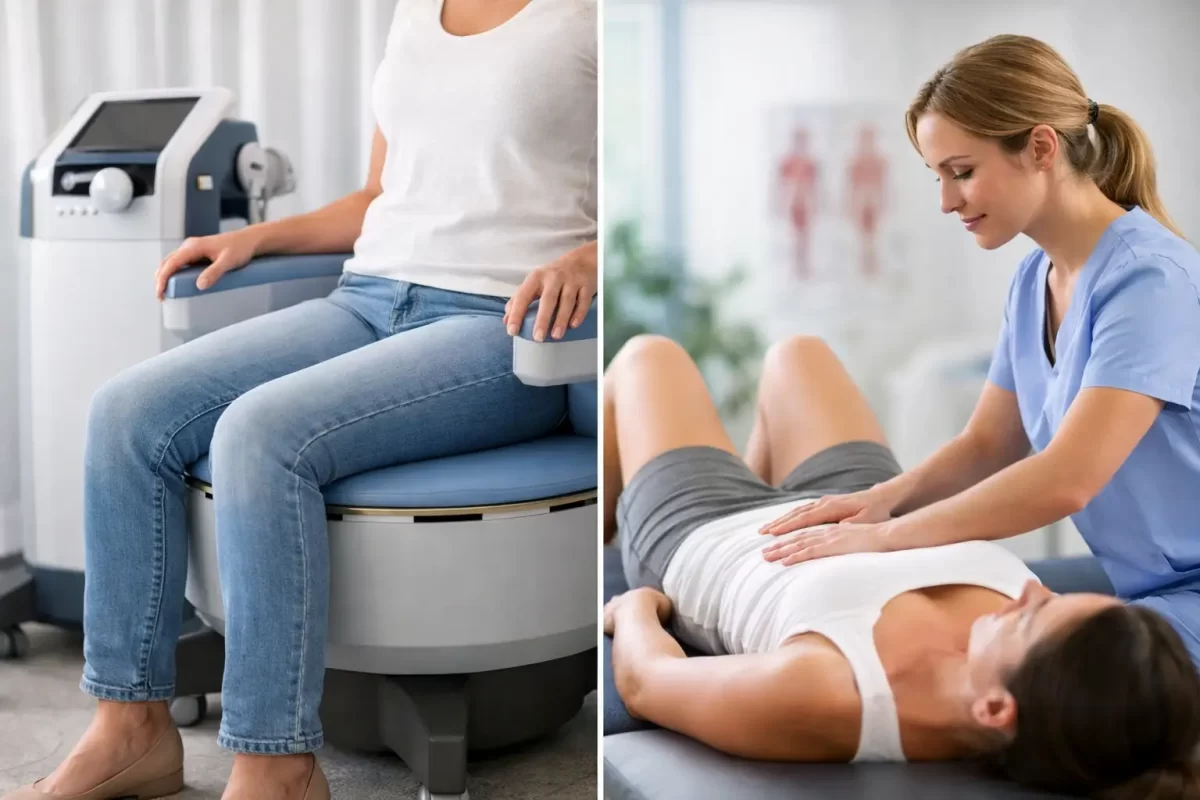
Both options aim to improve pelvic floor function. They do this in very different ways. Pelvic floor physiotherapy uses individual assessment, education and guided exercise. EMSELLA is a non-invasive chair treatment that uses high-intensity focused electromagnetic technology to stimulate the pelvic floor muscles while you remain fully clothed. For some people, the treatment plan may involve one approach first, or a considered combination of both.
Emsella vs pelvic floor physiotherapy: the key difference
Pelvic floor physiotherapy is a hands-on, personalised rehabilitation approach. A specially trained physiotherapist assesses how your pelvic floor muscles are working: whether they are weak, overactive, poorly coordinated or not relaxing properly. Treatment may include education about bladder habits, breathing, posture, bowel management, manual therapy and a tailored exercise program.
EMSELLA uses electromagnetic stimulation to generate repeated pelvic floor muscle contractions. During a typical session, you sit on the chair over your clothing for around 28 minutes. There are no probes, needles or recovery time, so you can return to work, errands or home straight afterwards.
The practical distinction is important. Physiotherapy relies on active learning and regular home exercises. EMSELLA delivers muscle stimulation without requiring you to identify and contract the muscles correctly on your own. This can be particularly appealing if you have struggled with Kegels, have limited time for rehabilitation or want a discreet, non-surgical option.
When pelvic floor physiotherapy may be appropriate
Pelvic floor physiotherapy may be a first-line treatment, particularly when the problem is more complex than simple muscle weakness. Not every pelvic floor needs strengthening. Some people have a tight or overactive pelvic floor that contributes to pelvic pain, pain with intercourse, constipation or difficulty emptying the bladder. In these circumstances, repeatedly contracting the muscles without a full assessment may not address the real issue.
A pelvic health physiotherapist can also teach the detail that matters: how to relax the pelvic floor, coordinate it with breathing and abdominal pressure, and use it during coughing, lifting, exercise or a sudden urge to urinate. This skill-building can be valuable for people returning to running after childbirth, managing prolapse symptoms or recovering from surgery.
Physiotherapy does require commitment. Results commonly depend on attending appointments, practising correctly at home and making changes to bladder, bowel or lifestyle habits where needed. For some people, that is exactly the support they need. For others, the time demands or uncertainty about whether they are doing exercises correctly become barriers.
When EMSELLA may be a practical option
EMSELLA may suit women and men with urinary leakage, urgency, reduced pelvic floor strength or reduced confidence related to intimate wellness. It is commonly considered by postpartum women, women experiencing menopausal changes, and men with urinary symptoms following prostate treatment, subject to individual medical assessment.
The chair produces repeated supramaximal pelvic floor contractions in a controlled clinical setting. The aim is to strengthen and re-educate the pelvic floor muscles that support the bladder and contribute to continence and sexual function.
For suitable patients, convenience may be a consideration. Sessions are short, non-invasive and drug-free. You do not need to undress, undertake a procedure or arrange downtime. A course of treatment is usually recommended rather than a single session, because muscles need repeated stimulation to adapt.
That said, EMSELLA is not a substitute for diagnosis. Urinary symptoms can arise from infection, prolapse, medication effects, neurological conditions, prostate concerns, bowel issues or changes in the bladder itself. Leakage should not simply be accepted as part of ageing or childbirth, but it should be assessed properly before treatment begins.
Comparing comfort, time and effort
Neither treatment is universally better. The relevant question is what you need from care.
With physiotherapy, appointments are usually longer and more investigative. Some assessments may involve an internal examination, although this should always be explained and consented to, and alternatives can be discussed. The process is individualised and usually includes exercises or other strategies between visits.
With EMSELLA, the treatment experience is straightforward. You feel tingling and strong pelvic floor contractions while seated. The intensity is adjusted to a level you can tolerate, and there is no recovery period. It may be easier to fit into a busy working week or family schedule, particularly for people who want support beyond unsupervised exercises.
Cost and availability also differ. Physiotherapy may involve ongoing sessions over a longer period, while EMSELLA is generally provided as a treatment package. Value should be considered alongside clinical suitability, the treatment commitment involved and the evidence relevant to your symptoms.
Results depend on the cause of your symptoms
People understandably want to know which option works faster. EMSELLA is designed to offer a time-efficient way to stimulate pelvic floor contractions, while physiotherapy builds understanding, coordination and self-management skills over time. Improvement can occur with either approach, but the pace and degree of change vary.
Pelvic floor strengthening may be considered for stress urinary incontinence, such as leakage with coughing, laughing or exercise, and for some urgency-related symptoms, depending on assessment. Where pelvic floor dysfunction contributes to sexual symptoms, treatment goals may include aspects of sexual function or wellbeing. For men, improved pelvic floor function can support bladder control and may form part of a broader approach to erectile function concerns.
However, no responsible clinic should promise identical results for every person. Severity of symptoms, childbirth history, menopause, prostate treatment, body weight, chronic cough, constipation, exercise habits and medical conditions can all influence outcomes. Continued pelvic floor exercises and healthy bladder habits may help maintain improvements, even after a course of device-based treatment.
Why medical assessment matters
Before EMSELLA, a clinician should take a careful history, discuss your symptoms and screen for suitability. This is particularly important where there may be contraindications or a condition requiring further investigation. Your clinician can advise whether EMSELLA is appropriate or whether another pathway should come first.
At Advance Medical Therapies in South Yarra, care begins with a GP-led consultation under Dr Shikha Parmar rather than a one-size-fits-all chair session. This creates space to discuss symptoms that are often minimised through embarrassment, including bladder leakage, urgency, changes after childbirth, menopausal concerns and post-prostate treatment difficulties.
A medical consultation can also identify when referral to a pelvic health physiotherapist, urologist, gynaecologist or another specialist is the more appropriate next step. Referral may be the appropriate clinical pathway.
Can you use both treatments?
Yes, in selected cases. In selected cases, EMSELLA and pelvic floor physiotherapy may be used together as part of a treatment plan. EMSELLA may provide intensive muscle stimulation, while physiotherapy can help you learn movement patterns, manage pressure during lifting or exercise, address overactivity where present and develop a sustainable home program.
The order matters. If you have pain, significant prolapse symptoms, difficulty emptying your bladder or uncertainty about what is causing your leakage, assessment should come before any treatment plan. If the main concern is weakness and you want a non-invasive, time-efficient way to support strengthening, EMSELLA may be worth discussing.
Bladder leakage and pelvic floor changes are common. If symptoms are affecting daily life, assessment can help clarify the cause and appropriate treatment options.
Ready to take the next step?
Contact our team to arrange your Emsella consultation and discuss your symptoms, goals, and whether Emsella may be appropriate for you.
Located in Melbourne
(03) 8529 2225 | Contact Us
