

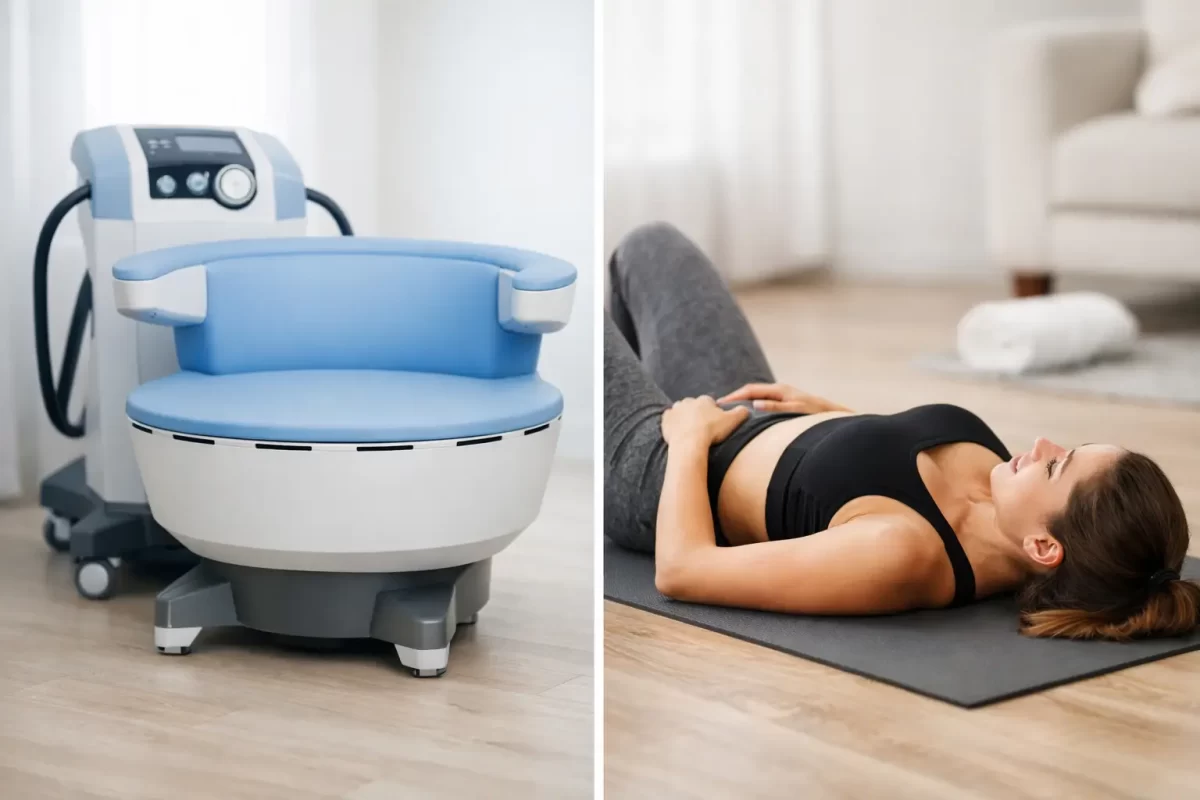
If you are weighing up emsella vs kegel exercises, the real question is not which one sounds better on paper. It is which option is more likely to improve your bladder control, pelvic floor strength and confidence in day-to-day life. For many people, especially after childbirth, during menopause, or after prostate-related changes, that answer depends on how weak the pelvic floor is to begin with, how consistently exercises are done, and whether you need a more intensive, medically guided approach.
Pelvic floor problems rarely stay limited to one inconvenience. A small leak when you cough can become a reason to avoid exercise. Urgency can interrupt sleep, travel and work. Reduced pelvic floor support can affect intimacy, vaginal tone and, for some men, sexual function. That is why this comparison matters. It is not only about treatment style. It is about quality of life.
Emsella vs kegel exercises – the core difference
Kegel exercises are voluntary contractions of the pelvic floor muscles. Done correctly and consistently, they can help strengthen the muscles that support the bladder, bowel and pelvic organs. They are often recommended as a first step because they are simple, private and cost very little.
EMSELLA works differently. It uses high-intensity focused electromagnetic energy to stimulate deep pelvic floor muscle contractions while you remain fully clothed and seated on a specialised chair. In practical terms, it creates thousands of supramaximal contractions in a single session, far beyond what most people can achieve on their own.
That difference matters because many patients do not just need reminders to do exercises. They need enough muscle activation to rebuild strength in a meaningful way. If the muscles are very weak, poorly coordinated, or difficult to identify, self-directed Kegels can be frustrating and ineffective.
Why Kegels help some people and fail others
Kegels can work well, but only when they are done properly. That sounds straightforward until you consider how often people are unknowingly tightening the wrong muscles. Some bear down instead of lifting. Others use their abdomen, buttocks or thighs. Many people are never taught how to isolate the pelvic floor correctly in the first place.
Even when technique is good, consistency is another hurdle. Pelvic floor exercises need repetition over time. That can be difficult when life is busy, symptoms are embarrassing, and progress feels slow. People often stop before the muscles have had a real chance to improve.
There is also the question of severity. Mild pelvic floor weakness may respond to a structured exercise program. More significant weakness, postpartum changes, menopausal tissue changes, or post-prostate symptoms may need a stronger intervention. In those cases, telling someone to keep doing Kegels can feel a bit like asking them to fix a major fitness problem with a few occasional stretches.
What EMSELLA is designed to do
EMSELLA is not simply a shortcut for people who do not want to exercise. It is a device-based treatment intended to stimulate the pelvic floor at an intensity that is difficult to replicate voluntarily. That can be particularly useful for patients with stress urinary incontinence, urgency, frequency, pelvic floor weakness and certain aspects of intimate wellness.
For women, treatment may support better bladder control, improved pelvic floor tone and increased confidence during exercise, coughing or laughing. For men, particularly those affected by prostate-related changes or post-surgical incontinence, pelvic floor strengthening can also play a role in symptom improvement. Some men may also notice benefits related to sexual health, including better pelvic floor support linked to erectile function.
The appeal is not only the technology. It is the convenience. Sessions are brief, non-invasive and require no undressing, no anaesthetic and no recovery period. For patients who want treatment that fits around work, family and normal routines, that ease matters.
Emsella vs kegel exercises for bladder leakage
When the main concern is urinary leakage, both options aim to improve muscle support around the bladder and urethra. The difference is usually in the intensity and reliability of muscle engagement.
Kegels can help with mild leaks, especially when started early and taught well. A motivated patient with good technique may do very well. But many people presenting for treatment have already tried pelvic floor exercises at home and are still wearing pads, planning their day around toilet access, or waking through the night with urgency.
EMSELLA may be better suited to this group because it provides a concentrated, structured series of treatments without depending on perfect technique at home. It does not replace medical assessment, and it is not the right option for every person, but it offers a stronger starting point for those who need more than self-guided exercise.
What about intimate wellness and sexual function?
This is where a lot of people hesitate to ask questions, even though the issue is common. Pelvic floor weakness can affect sensation, confidence and sexual satisfaction. In women, this may relate to reduced vaginal tone or less confidence after childbirth or menopause. In men, pelvic floor dysfunction can contribute to urinary symptoms and may affect aspects of erectile function.
Kegels can support improvement here, but again, results depend on correct performance and persistence. EMSELLA is often considered when the goal is not only better bladder control but also broader pelvic floor rehabilitation. Stronger muscle contractions may help restore support and function more effectively than inconsistent home exercises alone.
That said, intimate wellness is never one-size-fits-all. Hormones, nerve function, tissue health, medical history and lifestyle can all influence outcomes. A proper consultation matters because treatment works best when the cause of symptoms is understood rather than guessed.
Which is more convenient?
On cost alone, Kegels appear to win. They can be done anywhere and do not require a device or clinic visit. But convenience is not only about price. It is also about whether a treatment is realistic enough to continue and effective enough to justify your effort.
For many people, Kegels are easy to postpone, forget or perform incorrectly. EMSELLA requires scheduled appointments, but each session is passive and time-efficient. There is no need to set aside daily practice, and no concern about whether you are isolating the right muscles.
Patients often choose clinician-guided treatment for exactly that reason. They want a structured plan, realistic monitoring and medical oversight rather than another well-meaning instruction to squeeze and hope for the best.
Who may be better suited to Kegels?
Kegels can be a sensible first option for someone with mild symptoms, good awareness of their pelvic floor and the discipline to follow a proper program. They may also work well as part of ongoing maintenance after pregnancy, after pelvic health physiotherapy, or alongside other treatment recommendations.
They are also useful because they reinforce long-term muscle awareness. Even patients who pursue device-based treatment may still benefit from learning how to engage the pelvic floor correctly in daily life.
Who may be better suited to EMSELLA?
EMSELLA is often better suited to people who have tried Kegels without success, struggle to identify the correct muscles, or want faster, more intensive support for bladder leakage and pelvic floor weakness. It can also be appropriate for postpartum women, menopausal women and men dealing with prostate-related pelvic floor symptoms, depending on their medical assessment.
The key point is that EMSELLA should not be treated like a generic wellness add-on. The best outcomes come when treatment is guided by proper screening and clinical judgement. At a GP-led clinic, that means your symptoms, health history and suitability are assessed before treatment begins. That makes the process safer, clearer and more tailored to what you actually need.
Can EMSELLA and Kegels work together?
Yes, and in many cases they should. This is not always a case of one replacing the other. EMSELLA can provide intensive muscle stimulation to build a stronger baseline, while Kegels can help maintain awareness and support between or after treatments.
Think of it as the difference between supervised rehabilitation and home practice. One may create the initial improvement more efficiently, while the other helps reinforce it over time. The right balance depends on your symptoms, goals and how your body responds.
The most practical way to choose
If your symptoms are mild and recent, it may be reasonable to start with guided pelvic floor exercises. If you have been doing Kegels for months with little change, or if leakage, urgency or pelvic floor weakness is affecting your confidence, sleep or intimacy, a stronger treatment pathway deserves consideration.
That is where a consultation-led approach makes a real difference. Rather than treating every leak as the same, experienced GP Dr Shikha Parmar can assess whether your symptoms are likely to respond to exercises, whether EMSELLA is appropriate, and whether any other factors need attention first. For patients across Greater Melbourne looking for a discreet, non-surgical option, that level of medical guidance can make the decision much easier.
You do not need to keep guessing whether you are doing enough, doing it correctly, or simply putting up with a problem that has already started to limit your life. Pelvic floor symptoms are common, but they are not something you have to quietly work around forever.
Ready to take the next step?
Contact our team to arrange your Emsella consultation and discuss your symptoms, goals, and whether Emsella may be appropriate for you.
Located in Melbourne
(03) 8529 2225 | Contact Us