

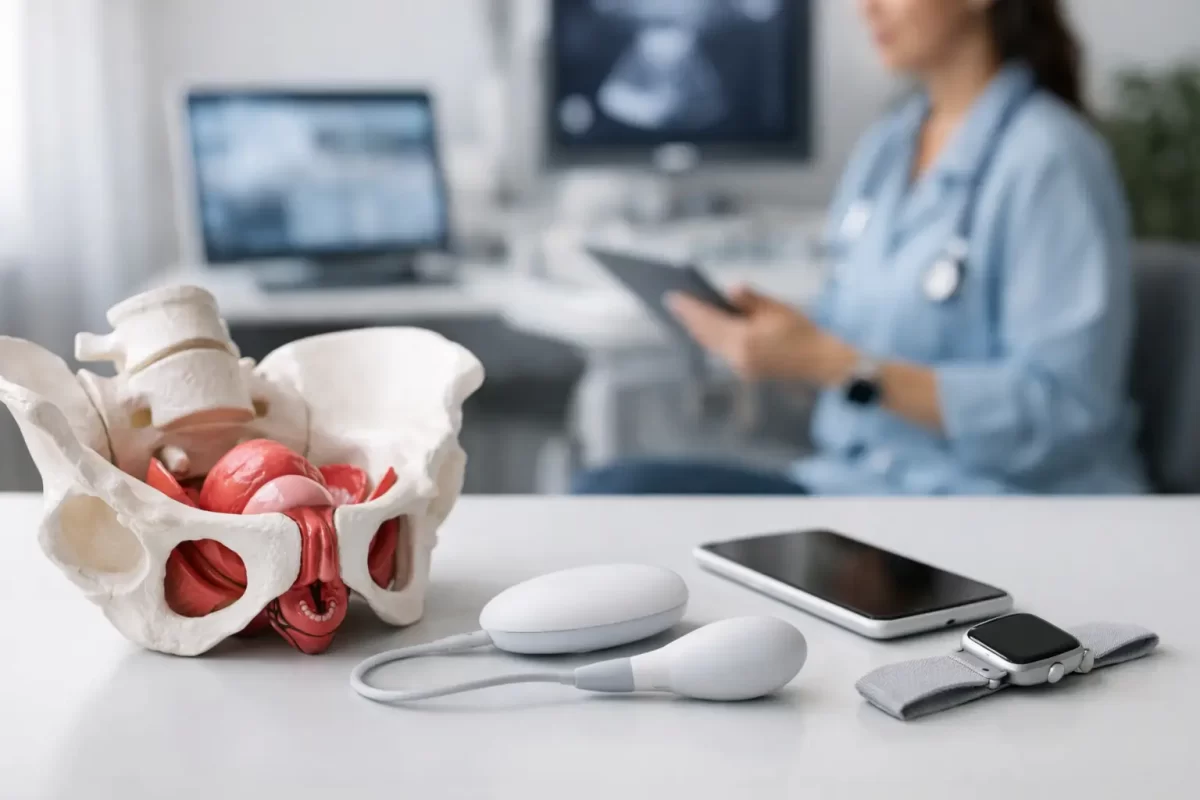
A decade ago, most people with bladder leakage or pelvic floor weakness were told some version of the same advice: wear a pad, do your Kegels, and consider surgery if things get worse. That is exactly why pelvic health technology trends matter. They are changing pelvic care from something many people quietly tolerate into something that can be assessed properly, treated earlier, and managed with far more dignity.
For patients, that shift is not just about newer machines. It is about getting real help for symptoms that affect sleep, exercise, confidence, work, intimacy and everyday comfort. For clinicians, it is about using better tools to match treatment to the person in front of them rather than relying on one-size-fits-all advice.
Pelvic health technology trends are moving beyond pads and patience
The biggest change is practical. Pelvic health is no longer being treated as a minor inconvenience, especially for women after childbirth or during menopause, and for men after prostate procedures or with ongoing pelvic floor weakness. There is broader recognition that urinary urgency, leakage, reduced pelvic support and changes in sexual function are medical concerns with quality-of-life consequences.
That recognition has driven demand for treatments that sit between home exercises and surgery. Many patients want something more effective than unsupervised Kegels but are not ready for an operation, medication side effects or lengthy rehabilitation. Technology has stepped into that middle ground.
This is where device-based pelvic floor therapy such as the EMSELLA chair has gained attention. Rather than asking patients to guess whether they are contracting the right muscles, newer technologies can stimulate the pelvic floor in a much more targeted and intensive way. That can be especially valuable for people who have tried exercises without much progress, or who struggle to activate the muscles consistently.
Non-invasive energy-based treatment is becoming mainstream
One of the clearest pelvic health technology trends is the rise of non-invasive treatment platforms designed to strengthen the pelvic floor without internal probes, medication or surgery. For many patients, that matters because convenience and comfort are often the difference between delaying care and starting it.
High-intensity electromagnetic treatment is a strong example of this shift. The technology is designed to trigger thousands of supramaximal pelvic floor contractions in a single session, which is far beyond what most people can achieve on their own. The clinical appeal is straightforward: it offers a structured, repeatable way to retrain weakened muscles and improve support for the bladder and pelvic organs.
That does not mean it replaces every other approach. It depends on the cause of the symptoms, the severity, the patient’s medical history and what outcomes they want. Some people still need pelvic floor physiotherapy, lifestyle changes, medication, or specialist referral. But for the right patient, non-invasive energy-based treatment can offer a meaningful step forward with very little disruption to daily life.
Doctor-led screening is becoming more important
Not all pelvic symptoms are the same, even when they sound similar. Leakage with coughing or exercise may point to stress urinary incontinence. Strong urgency and frequent trips to the toilet may suggest a different pattern. Pelvic heaviness, pain, bowel symptoms or blood in the urine raise other considerations altogether.
That is why another key trend is the move away from generic wellness-style treatment and towards proper clinical assessment. Patients are increasingly looking for pelvic health care that starts with screening, medical history and realistic treatment planning. This is particularly important in a field where embarrassment often leads people to self-diagnose or to put up with symptoms for years.
A doctor-led clinic model adds value because it helps identify who is likely to benefit from a device-based treatment and who needs further investigation first. It also protects patients from wasted time and money. Pelvic health technology works best when it is part of a medical decision-making process, not when it is treated like a beauty service.
Data, evidence and regulatory credibility matter more than marketing
Patients are becoming more cautious about bold health claims, and rightly so. Another of the most important pelvic health technology trends is the growing emphasis on evidence, safety and regulatory status. People want to know whether a treatment has been studied, whether it is approved for its intended use, and whether there is a plausible mechanism behind the claims.
That is a healthy shift. Pelvic health is an area where vulnerable patients can easily be drawn in by overpromising language, especially when symptoms affect confidence and intimacy. A credible clinic should be able to explain what the treatment is designed to do, what level of improvement is realistic, how many sessions are usually needed, and where the limits are.
This is also where expectations need to stay grounded. Technology can improve muscle strength, bladder control and pelvic support, but results vary. Some patients notice change quickly. Others need a full treatment course and ongoing maintenance. Severe prolapse, neurological conditions or complex pelvic disorders may need a different pathway. Good care means being honest about that.
Pelvic health technology is expanding beyond women’s care
Pelvic health is still often spoken about as a women’s issue, but the field is broadening. Men are increasingly part of the conversation, especially those dealing with post-prostate leakage, pelvic floor weakness or sexual function concerns linked to poor muscular support and circulation.
This matters because men are often even less likely to seek help early. Many assume bladder symptoms are just part of ageing, or they avoid treatment because they do not want surgery. Technology that is non-invasive and clinician-guided can make treatment feel more accessible and less confronting.
It also reflects a more accurate understanding of pelvic health. The pelvic floor is not a niche topic. It is part of bladder control, bowel support, core stability and sexual wellbeing for both sexes. As awareness grows, the old stigma is slowly losing ground.
Convenience is now part of good medicine
Another major trend is the expectation that effective treatment should fit into real life. People are busy. They are working, caring for family, trying to stay active and often managing symptoms around all of that. If treatment is too invasive, too painful or too time-consuming, many will simply put it off.
That is one reason chair-based pelvic floor therapies have attracted interest. They allow patients to remain clothed during treatment, do not require downtime, and can be completed in relatively short appointments. For someone who has been silently planning their day around toilet access, that level of convenience is not trivial. It can be the factor that finally makes treatment feel possible.
In practical terms, convenience also supports adherence. A treatment course only helps if people complete it. The easier a therapy is to tolerate and schedule, the more likely patients are to stay the course and give it a fair chance to work.
The future is more personalised, not more complicated
The most promising pelvic health technology trends are not really about adding complexity. They are about better matching treatment to symptoms, anatomy, stage of life and patient goals. A postpartum woman with mild stress leakage does not need the same plan as a menopausal woman with pelvic floor laxity, or a man recovering from prostate surgery.
That is where the field is heading – more tailored care, earlier intervention and better use of complementary approaches. Technology may be combined with bladder habit retraining, weight management, hormone-related care, pelvic floor physiotherapy or follow-up maintenance depending on the person. In other words, the device is not the whole story. It is one part of a more thoughtful treatment model.
For patients in Greater Melbourne who want a medically guided option, this matters. Access to advanced pelvic floor treatment is only truly useful when it comes with proper screening, clear advice and a plan that reflects the actual cause of the symptoms.
What patients should look for now
If you are considering pelvic floor treatment, the technology itself is only one question. The more useful question is whether the clinic can explain why that treatment suits your symptoms, what outcomes are realistic, and what happens if you need a different pathway. That is the standard pelvic care should now meet.
The best technology in this space is helping to normalise a message many patients need to hear: bladder leakage, pelvic floor weakness and related intimate concerns are common, but they are not something you simply have to live with. When care is evidence-based, non-invasive and clinically supervised, treatment can feel less embarrassing and far more achievable.
A good next step is often not dramatic. It is simply having the conversation, getting assessed properly and finding out which options genuinely fit your body, your symptoms and your life.
Ready to take the next step?
Contact our team to arrange your Emsella consultation and discuss your symptoms, goals, and whether Emsella may be appropriate for you.
Located in Melbourne
(03) 8529 2225 | Contact Us