

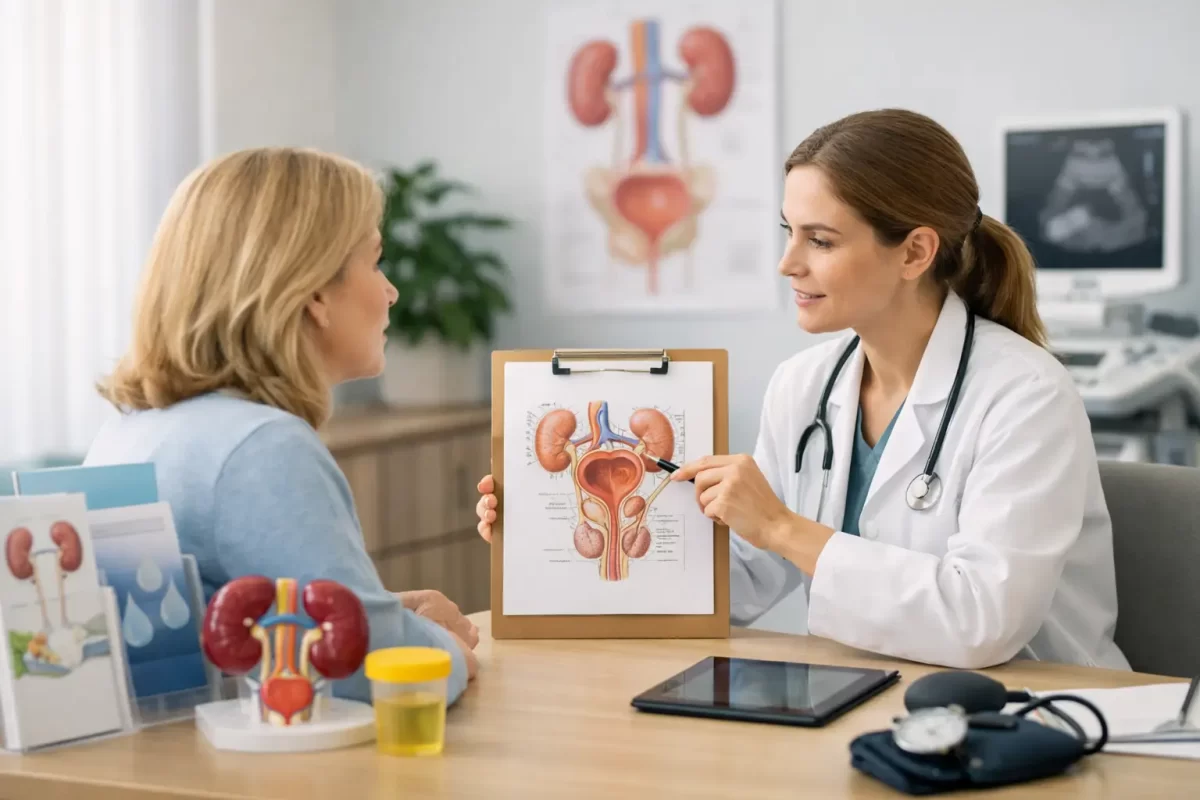
Bladder leakage rarely starts as a dramatic problem. More often, it shows up in small, frustrating ways – a few drops when you laugh, a sudden dash to the toilet, or the habit of always checking where the nearest bathroom is before you leave home. This guide to bladder leakage causes is designed to help you understand what may be driving the issue, and why it is worth addressing early.
For many people, leakage is not just a bladder problem. It is tied to pelvic floor weakness, hormonal change, nerve signalling, prostate health, previous surgery, or pressure on the bladder from everyday life. The cause matters because the right treatment depends on what is actually going on underneath the symptom.
Why bladder leakage happens
Bladder control depends on several systems working together. The bladder has to store urine calmly, the pelvic floor and sphincter muscles need to stay strong enough to keep the outlet closed, and the brain and nerves must coordinate the timing of release. When one part of that system is under strain, leakage can happen.
That is why urinary incontinence is not a single condition. Two people can have the same symptom, such as leaking on the way to the toilet, but for very different reasons. One may have weakened pelvic floor support after childbirth. Another may have an overactive bladder, enlarged prostate, or nerve-related change affecting bladder control.
A guide to bladder leakage causes by type
Understanding the pattern of leakage often gives the first clue.
Stress incontinence
Stress incontinence means urine leaks when pressure inside the abdomen rises. Coughing, sneezing, laughing, lifting, exercise, or even standing up quickly can trigger it. This is commonly linked to pelvic floor weakness or a reduced ability of the urethra to stay closed under pressure.
It is especially common after pregnancy and vaginal birth, but it also affects menopausal women and men after prostate procedures. Weight gain, chronic coughing, constipation and heavy lifting can all make it worse because they increase pressure on tissues that are already struggling.
Urge incontinence
Urge incontinence is the sudden, difficult-to-delay need to pass urine, sometimes followed by leakage before reaching the toilet. People often describe it as the bladder giving very little warning. This can be related to an overactive bladder, where the bladder muscle contracts too readily.
Triggers vary. Some people notice urgency after hearing running water, unlocking the front door, or standing up after sitting for a while. Bladder irritation, nerve changes, ageing, certain medications and underlying medical conditions can all play a part.
Mixed incontinence
Mixed incontinence is a combination of stress and urge symptoms. This is common, particularly in women over 40. You might leak with exercise but also feel a strong urgency that is hard to control.
Mixed symptoms can be more disruptive because they affect both physical activity and daily routines. They also need a more tailored treatment approach, rather than assuming there is one simple cause.
Overflow and functional leakage
Overflow incontinence happens when the bladder does not empty properly and becomes too full, leading to dribbling or frequent small leaks. In men, prostate enlargement is a common reason. Functional leakage is slightly different – the bladder may work normally, but mobility issues, pain, arthritis or difficulty undressing in time prevent someone from reaching the toilet.
These categories matter because treatment aimed at one type of leakage may not help another. In some cases, it can even make symptoms worse if the underlying issue is missed.
Common physical causes of bladder leakage
Pelvic floor weakness
The pelvic floor is a group of muscles that supports the bladder, bowel and reproductive organs. When these muscles weaken or lose coordination, bladder control often suffers. This is one of the most common causes of leakage in women and a significant factor for some men as well.
Pregnancy and childbirth can stretch and strain the pelvic floor. Menopause can also contribute, as lower oestrogen levels affect tissue support and elasticity. In men, pelvic floor weakness may develop with age, chronic straining, or after prostate surgery.
Hormonal changes and ageing
Ageing does not automatically mean incontinence, but it does change the tissues and muscles involved in bladder control. Hormonal shifts during menopause can reduce support around the bladder and urethra. In men, ageing may coincide with prostate enlargement or reduced pelvic floor function.
The key point is that leakage may become more likely with age, but it is still treatable. It should not be dismissed as something you simply have to put up with.
Prostate-related issues
For men, prostate health can be central to bladder leakage. An enlarged prostate may obstruct urine flow, causing urgency, frequency, poor emptying or overflow-type leakage. Prostate surgery can also temporarily or more persistently affect the muscles and mechanisms involved in continence.
This is one reason bladder leakage in men should not be overlooked. It may reflect changes that need proper assessment, especially if symptoms started after treatment for prostate conditions.
Pregnancy and postpartum recovery
Leakage during pregnancy is common because of hormonal changes, increased pressure from the growing baby, and stretching of the pelvic floor. After birth, symptoms may continue for weeks, months, or longer if the muscles do not fully recover.
Some women assume they need to wait it out indefinitely. In reality, persistent postpartum leakage often responds best when it is assessed properly rather than left to become the new normal.
Nerve and medical conditions
Bladder control relies on clear communication between the brain, spinal cord and pelvic nerves. Diabetes, stroke, multiple sclerosis, Parkinson’s disease and spinal issues can all interfere with that signalling. The result may be urgency, incomplete emptying, or poor awareness of bladder filling.
This is one of the clearest examples of why self-diagnosing can be misleading. The leakage may look simple on the surface but have a more complex medical basis.
Lifestyle and everyday factors that can make leakage worse
Not every cause is structural. Some triggers aggravate an existing weakness or irritate the bladder enough to increase symptoms.
Caffeine, alcohol and fizzy drinks can worsen urgency in some people. Constipation can place extra pressure on the bladder and pelvic floor. Carrying excess weight increases strain across the abdomen and pelvis. Chronic coughing from smoking or lung disease can repeatedly stress the same support structures that help prevent stress leakage.
Certain medications may also contribute, including diuretics and some drugs that affect muscle tone or alertness. This does not mean the medication is wrong, but it does mean symptoms should be reviewed in context.
When bladder leakage points to pelvic floor dysfunction
A guide to bladder leakage causes would be incomplete without focusing on pelvic floor dysfunction, because it sits behind a large share of cases seen in clinical practice. Pelvic floor weakness often develops gradually. You may first notice minor leakage during exercise, reduced vaginal tone, less confidence in intimacy, or the sense that you can no longer hold on as long as you used to.
For men, pelvic floor dysfunction can show up after prostate treatment, but it can also affect bladder control, confidence and sexual function more broadly. The overlap matters. These symptoms are often connected, not separate problems happening by chance.
When pelvic floor weakness is a key driver, general advice alone is often not enough. Some people do well with conventional pelvic floor exercises, while others struggle to identify the correct muscles, perform the exercises consistently, or generate enough contraction to create meaningful change.
When to seek medical assessment
Any new, persistent or worsening bladder leakage deserves assessment, particularly if it affects sleep, exercise, work, travel or intimacy. You should also seek advice if leakage is accompanied by pain, blood in the urine, recurrent urinary tract infections, difficulty emptying the bladder, or symptoms after prostate surgery or childbirth that are not improving.
A medical assessment helps clarify whether the issue is stress incontinence, urge incontinence, mixed incontinence, pelvic floor weakness, prostate-related dysfunction, or something else entirely. That clarity makes treatment more effective and avoids wasting time on approaches that are unlikely to help.
In a doctor-led setting, treatment may include lifestyle changes, bladder retraining, pelvic floor rehabilitation, or device-based pelvic floor therapy for suitable patients. For people who want a non-surgical and drug-free option, this can be an important part of care, especially when unsupervised Kegels have not delivered results.
At clinics such as Advance Medical Therapies in Melbourne, the focus is not simply on symptom management. It is on identifying the likely cause, screening appropriately, and offering treatment that fits the person rather than treating leakage as an inevitable part of ageing.
Bladder leakage is common, but common does not mean trivial. When you understand the cause, the problem usually feels less frightening and far more manageable. If leakage is changing how you move, sleep, socialise or feel about your body, that is reason enough to have it taken seriously.
Ready to take the next step?
Contact our team to arrange your Emsella consultation and discuss your symptoms, goals, and whether Emsella may be appropriate for you.
Located in Melbourne
(03) 8529 2225 | Contact Us