

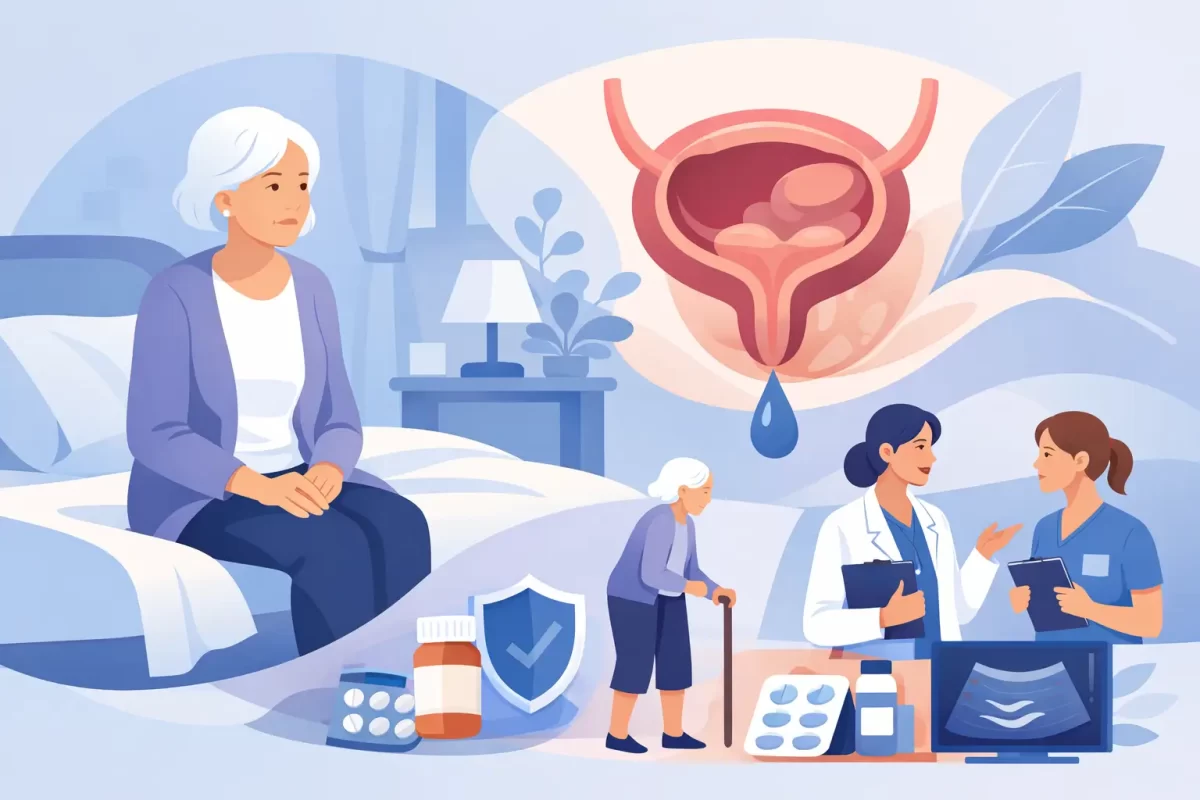
A lot of older women quietly plan their day around the nearest toilet. They wear pads they never wanted to need, wake several times a night, and think bladder leakage is simply part of ageing. It is common, but it is not something you just have to put up with. Urinary incontinence treatment for elderly female patients has improved significantly, and there are now effective options that do not rely on surgery or long-term medication.
Why bladder leakage becomes more common with age
Urinary incontinence in older women usually has more than one cause. Ageing affects tissue strength, menopause reduces oestrogen support around the bladder and urethra, and pelvic floor muscles often weaken over time. Pregnancy, childbirth, chronic coughing, constipation, previous pelvic surgery, reduced mobility and some medical conditions can all add to the problem.
That is why two women with the same symptom can need very different treatment. One may leak when she coughs or laughs. Another may feel sudden urgency and not make it to the toilet in time. Many experience both.
The most common types are stress incontinence, urgency incontinence and mixed incontinence. Stress incontinence happens when pressure on the bladder causes leakage during movement, lifting, sneezing or exercise. Urgency incontinence is linked to a strong, hard-to-delay need to pass urine. Mixed incontinence combines elements of both, which is very common in older women.
The right urinary incontinence treatment for elderly female patients starts with the cause
The best treatment starts with proper assessment, not guesswork. Bladder leakage can sometimes be related to urinary tract infection, prolapse, medication side effects, diabetes, neurological conditions or incomplete bladder emptying. If those issues are missed, treatment may be less effective or simply the wrong fit.
A medical assessment usually looks at symptom pattern, fluid habits, bowel function, pelvic floor strength, mobility and overall health. In some cases, a bladder diary is useful. This kind of doctor-led screening matters because incontinence is not a single condition. It is a symptom with several possible drivers.
For many women, the most effective plan involves a combination of approaches rather than one standalone fix.
Conservative treatment options that still matter
Pelvic floor muscle training remains a first-line treatment for many women, especially for stress incontinence. When done correctly and consistently, it can improve support around the bladder and urethra. The difficulty is that many women are unsure whether they are contracting the right muscles, and some have weak muscle recruitment despite their best efforts.
Bladder training can also help, particularly for urgency and frequency. This aims to gradually increase the time between toilet visits so the bladder becomes less reactive. It is useful, but results can take time, and it requires consistency.
Lifestyle measures have a role as well. Reducing bladder irritants such as excess caffeine, managing constipation, reviewing fluid timing and addressing chronic cough can make a noticeable difference. Weight management can help some women too, especially when abdominal pressure contributes to stress leakage.
These approaches are worthwhile, but they are not always enough on their own. Older women who have tried Kegels for months without progress often assume they have run out of options. That is not necessarily the case.
Medication and surgery can help, but they are not right for everyone
Some forms of urgency incontinence may be treated with medication. For the right patient, this can reduce bladder overactivity. The trade-off is that medicines can cause side effects such as dry mouth, constipation, blurred vision or dizziness. In an older population, that matters. Side effects can affect comfort, adherence and sometimes overall safety.
Surgery may be considered in selected cases, particularly for stress incontinence or significant prolapse. Surgical treatment can be effective, but it is not the first choice for everyone. Recovery time, medical fitness, personal preference and the nature of the incontinence all need to be considered carefully.
Many women want a treatment that is effective but avoids both medication burden and invasive procedures. That is where non-surgical pelvic floor therapies have become increasingly relevant.
A modern option for urinary incontinence treatment for elderly female patients
For women with pelvic floor weakness, one of the most practical developments in recent years is high-intensity focused electromagnetic pelvic floor treatment, commonly known through the EMSELLA chair. This is a non-invasive treatment designed to stimulate thousands of supramaximal pelvic floor contractions in a single session while the patient remains fully clothed and seated.
In plain terms, it does what many women struggle to do with unsupervised exercises alone. It activates the pelvic floor muscles deeply and repeatedly, helping rebuild strength and neuromuscular control. That can improve bladder support, reduce leakage episodes and ease urgency symptoms in the right patient.
This approach is particularly appealing to older women who want treatment that is simple, dignified and easy to fit into daily life. There are no incisions, no anaesthetic and no recovery downtime. A session is brief, and patients can return to normal activity straight after.
Who may benefit from EMSELLA-style pelvic floor treatment
This treatment may suit women who leak when they cough, sneeze, laugh or stand up quickly. It may also help women with mixed symptoms, especially when pelvic floor weakness is part of the picture. Women who have found it difficult to perform pelvic floor exercises correctly often appreciate a treatment that does not rely on technique or home compliance alone.
It can also be a good option for women who feel embarrassed by intimate examinations or are looking for a more discreet pathway into treatment. That said, not every case of incontinence is suitable. Severe prolapse, certain implanted devices, active infections and some neurological conditions may affect eligibility. That is why proper screening is essential.
At a doctor-led clinic, the value is not just the device itself. It is the medical judgement around whether the treatment is appropriate, what outcomes are realistic, and whether another cause needs attention first.
What results can older women realistically expect?
This depends on the type and severity of symptoms, how long the problem has been present, and whether there are contributing issues such as prolapse, obesity or chronic constipation. Some women notice changes early, while others improve more gradually over a treatment course.
The goal is not perfection in every case. It is meaningful improvement in everyday life. That may mean fewer accidents, less urgency, fewer pad changes, better sleep, more confidence leaving the house, or returning to exercise and social activities without constant worry.
For some women, treatment can be life-changing. For others, it forms part of a broader management plan. A credible clinic should be honest about that. Incontinence treatment is not one-size-fits-all, and realistic expectations are part of good care.
Why dignity matters as much as symptom control
Bladder leakage affects much more than the bladder. It changes how women dress, where they go, how long they stay out, and whether they feel comfortable being active or intimate. Many older women minimise the problem for years because they are embarrassed or assume nobody can help.
That delay is understandable, but it often prolongs distress unnecessarily. Incontinence is a medical issue, not a personal failing. The right care should feel respectful, discreet and straightforward. It should make it easier to seek treatment, not harder.
For women in Greater Melbourne looking for a non-surgical option, a consultation-led service such as Advance Medical Therapies can offer a more medically guided alternative to generic wellness-style treatment. That distinction matters when symptoms are affecting quality of life and confidence.
When to seek help
If bladder leakage is happening regularly, disturbing sleep, limiting activity or affecting confidence, it is worth getting assessed. The same applies if symptoms have recently worsened, urgency is becoming harder to control, or you are relying on pads every day.
Seek prompt medical advice if leakage is associated with pain, blood in the urine, recurrent infections or difficulty emptying the bladder. Those symptoms need proper investigation rather than self-management.
Many women wait until the problem becomes severe. There is no need to do that. Early treatment is often simpler, and even long-standing symptoms may improve with the right plan.
Living with incontinence might have become normal, but that does not make it acceptable. Effective treatment can restore comfort, confidence and a sense of control that many women thought they had lost for good.
Ready to take the next step?
Contact our team to arrange your Emsella consultation and discuss your symptoms, goals, and whether Emsella may be appropriate for you.
Located in Melbourne
(03) 8529 2225 | Contact Us