

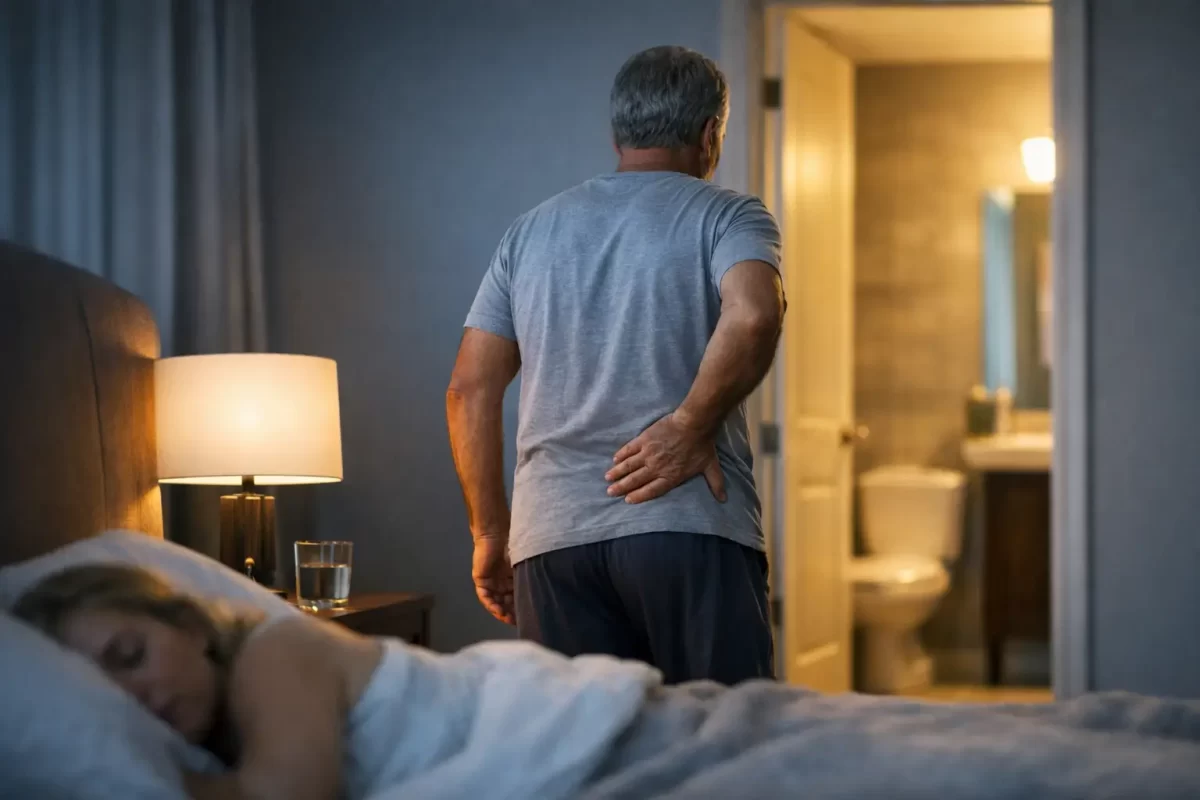
Waking two, three or even four times a night to use the toilet can wear you down faster than most people realise. Poor sleep affects mood, energy, concentration and confidence, and many people quietly put up with it for years. If you want to reduce nighttime urination naturally, the first step is understanding that it is not always just a drinking-too-much-water problem.
Nighttime urination, often called nocturia, can be driven by several factors at once. For some people, the bladder is becoming more sensitive or less able to hold urine comfortably. For others, pelvic floor weakness, hormonal changes, age-related shifts, prostate enlargement, swelling in the legs, poor sleep, or bladder irritation all play a part. That is why a sensible natural approach focuses on patterns, not quick fixes.
Why nighttime urination happens
Your kidneys, bladder, pelvic floor and nervous system all influence how well you stay asleep without needing the toilet. During the night, the body usually reduces urine production and the bladder stores urine until morning. When that system is disrupted, you wake more often.
In women, pregnancy, childbirth and menopause can change pelvic floor support and bladder control. In men, prostate-related changes are common, particularly after 40. In both men and women, extra weight, constipation, caffeine, alcohol, diabetes, some medications, and untreated sleep apnoea may contribute.
There is also an important difference between waking because your bladder is truly full and waking because your bladder feels urgent when it is not holding much. That distinction matters. A full bladder points more towards fluid balance or urine production. Urgency with smaller volumes may suggest bladder overactivity, irritation or pelvic floor dysfunction.
How to reduce nighttime urination naturally at home
Natural strategies can help, especially when symptoms are mild to moderate. The key is to be consistent for a few weeks rather than trying everything for two days and assuming it does not work.
Adjust when you drink, not just how much
Many people make the mistake of cutting fluids all day, then becoming thirsty in the evening. That often backfires. Better hydration earlier in the day, with a gradual reduction after dinner, is usually more effective.
Aim to spread fluids evenly from morning to late afternoon. Then reduce intake in the two to three hours before bed. You still need enough fluid overall, particularly in warmer weather or if you are active, but timing matters. If you drink tea, coffee or cola in the afternoon or evening, try moving these to earlier in the day. Caffeine can irritate the bladder and increase urgency, even if you feel you tolerate it well.
Alcohol is another common trigger. It can increase urine production and fragment sleep, which makes you more aware of bladder sensations. If nighttime trips are a problem, avoiding alcohol in the evening is often worth trying.
Review common bladder irritants
Some people notice more urgency after coffee, fizzy drinks, citrus, artificial sweeteners or spicy foods. Others do not. This is where a brief bladder diary can be useful.
For three days, note what you drink, when you drink it, how often you pass urine, and how many times you wake overnight. Patterns often become obvious quite quickly. You may find that one strong flat white after 4 pm matters more than total fluid intake.
Elevate your legs in the evening if swelling is part of the picture
If your ankles or lower legs swell through the day, that fluid can shift back into circulation once you lie down, leading to more urine production overnight. This is common in older adults and in people who sit or stand for long periods.
Putting your feet up for an hour or two in the evening may help. Some people benefit from a gentle walk late in the afternoon, followed by leg elevation before bed. If swelling is significant or new, though, it should be medically assessed rather than self-managed.
Train the bladder gently
When urgency becomes frequent, people often start going to the toilet “just in case”. That can make the bladder more sensitive over time. Bladder training aims to restore a calmer pattern.
During the day, try to avoid emptying your bladder too often unless you genuinely need to go. If urgency hits, pause, breathe, sit if possible, and let the sensation settle before rushing off. This is not about ignoring severe discomfort. It is about reducing habits that reinforce urgency.
Over time, bladder training can help increase the interval between trips. It tends to work best when paired with pelvic floor support.
Pelvic floor strength matters more than many people think
If you are trying to reduce nighttime urination naturally, do not overlook the pelvic floor. These muscles support the bladder and help control urgency and leakage. When they are weak or poorly coordinated, the bladder may feel less stable, particularly at night when position changes and urgency can trigger waking.
This is especially relevant after childbirth, during and after menopause, and for men with prostate-related bladder symptoms or after prostate treatment. The challenge is that many people either do Kegels incorrectly or do not see enough improvement with unsupervised exercises alone.
A stronger pelvic floor may help reduce urgency, improve bladder support and lower the chance of leakage on the way to the toilet. It is not a cure for every cause of nocturia, but it is often part of the solution.
When home exercises are not enough
If you have been trying pelvic floor exercises for months without meaningful change, it may be time for a more structured assessment. In a medical clinic setting, treatment options can go beyond verbal advice and basic handouts.
For some patients, non-invasive pelvic floor stimulation can provide a more effective way to activate and strengthen muscles that are hard to engage properly on their own. Clinics such as Advance Medical Therapies use consultation-led assessment to determine whether symptoms relate to pelvic floor weakness, bladder control issues or a different underlying cause. That distinction matters because not every bladder problem should be treated the same way.
Sleep habits can help, but they are not the whole answer
Sometimes the bladder is not the only issue. Light sleepers wake easily, then notice the urge to urinate once awake. In that case, improving sleep quality may reduce the number of toilet trips that feel necessary.
Keep the bedroom cool and dark, maintain a regular bedtime, and limit screen time before bed if it affects sleep. If you snore heavily, wake unrefreshed, or feel exhausted despite enough time in bed, speak with your GP about sleep apnoea. It is a surprisingly common contributor to nocturia.
Good sleep habits help, but they should not be used to dismiss bladder symptoms. If you are waking because of urgency, leakage or disrupted control, that deserves proper attention.
When natural measures are unlikely to be enough
Natural strategies are useful, but there are limits. If you are getting up multiple times every night, symptoms have worsened, or your quality of life is clearly affected, relying on self-help alone may delay effective treatment.
You should arrange a medical assessment if nighttime urination is accompanied by pain, burning, blood in the urine, recurrent urinary tract infections, marked urgency, difficulty starting flow, a weak stream, pelvic pressure, new incontinence, or significant daytime frequency. The same applies if symptoms began after surgery, childbirth, menopause-related changes, or prostate treatment.
It is also worth seeking help if you are avoiding travel, intimacy or social activities because of bladder concerns. Sleep disruption is not minor when it is affecting your day-to-day life.
A practical way to think about progress
Expect improvement in steps, not overnight perfection. For some people, reducing two or three bladder irritants and changing evening fluid timing makes a noticeable difference within a fortnight. For others, especially where pelvic floor weakness or underlying bladder dysfunction is involved, natural changes help but do not solve the problem fully.
That does not mean you have failed. It means your symptoms may need a more targeted plan. A proper consultation can identify whether the issue is bladder overactivity, pelvic floor weakness, prostate-related obstruction, fluid redistribution, sleep disturbance or a combination of factors.
The most effective care is often the least dramatic. It is a careful assessment, practical changes that fit real life, and treatment that matches the cause. If you have been trying to manage this quietly, that is understandable. But broken sleep and constant toilet trips are not something you simply have to accept as part of getting older.
A good night’s sleep is not a luxury. If natural steps help, that is excellent. If they only get you part of the way, there are still respectful, drug-free and non-surgical options worth discussing.
Ready to take the next step?
Contact our team to arrange your Emsella consultation and discuss your symptoms, goals, and whether Emsella may be appropriate for you.
Located in Melbourne
(03) 8529 2225 | Contact Us