

Pelvic Floor Therapy vs Kegel Exercises Compared
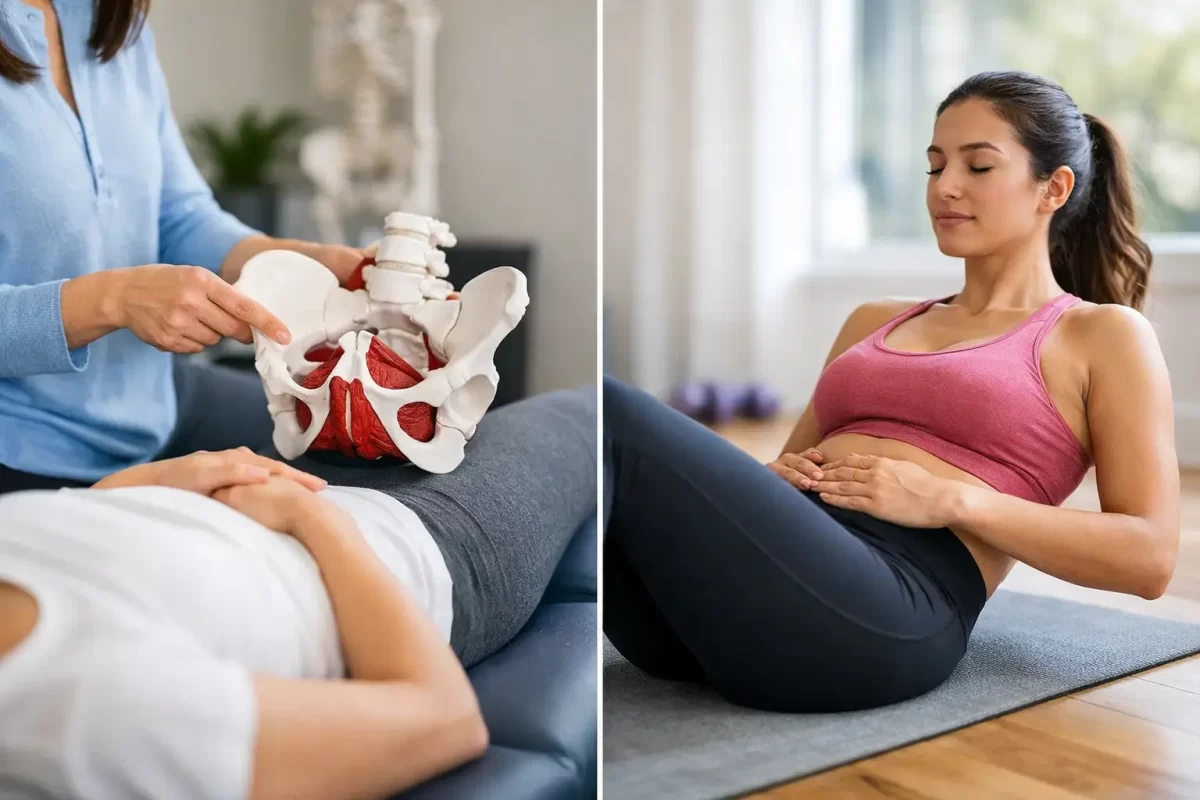
Leaking when you laugh, rushing to the toilet, waking through the night or avoiding exercise can gradually make life smaller. When comparing pelvic floor therapy vs kegel exercises, the real question is not which option is “best” in general. It is which approach can safely address your symptoms, your pelvic floor function and the practical barriers that have stopped improvement so far.
Kegels can be useful. However, they rely on finding the right muscles, contracting them correctly and practising consistently for long enough to create change. For people with persistent symptoms, weak muscle awareness or a pelvic floor that is not simply weak, clinician-guided treatment may provide an appropriate alternative or addition.
What are Kegel exercises?
Kegel exercises are voluntary contractions of the pelvic floor muscles. These are the muscles that support the bladder, bowel and, in women, the uterus. They also contribute to continence and sexual function in both women and men.
A correctly performed Kegel feels like a gentle lift and squeeze around the anus and urethra, without gripping the buttocks, thighs or abdomen. The aim is usually to build strength, coordination and endurance over time.
For someone with mild symptoms who can identify the correct muscles, a structured exercise programme may be a sensible first step. It is private, costs nothing and can be incorporated into daily routines. The challenge is that correct technique is not always as obvious as it sounds.
Many people bear down rather than lift, hold their breath, tense surrounding muscles or only practise sporadically. Others have a pelvic floor that is overly tight, poorly coordinated or affected by prolapse, surgery, nerve changes or chronic pain. In those situations, more squeezing is not automatically the answer.
What does pelvic floor therapy involve?
Pelvic floor therapy is a broad term for professionally guided care aimed at improving pelvic floor function. It can include assessment, education, tailored exercises, bladder retraining, manual therapy where appropriate and device-based treatments.
The starting point should be an assessment rather than an assumption that every bladder concern comes from weak muscles. Urinary urgency, stress leakage, incomplete emptying, bowel symptoms, pelvic pain and sexual changes can have different causes. A clinician can identify whether strengthening is likely to help, whether another approach is needed, or whether further medical investigation should come first.
At Advance Medical Therapies, consultation-led care may include treatment with the EMSELLA chair for suitable patients. EMSELLA uses high-intensity focused electromagnetic energy to stimulate pelvic floor muscle contractions while you remain fully clothed and seated. A session produces repeated high-intensity pelvic floor muscle contractions in a controlled clinical setting.
This does not make it a replacement for every form of pelvic health care. Rather, it offers a non-invasive, clinician-guided option for suitable patients, including people who struggle to activate their pelvic floor muscles effectively.
Pelvic floor therapy vs Kegel exercises: the key differences
The clearest difference is guidance. Kegels are self-directed unless taught and checked by a qualified clinician. Pelvic floor therapy begins with an assessment, so the treatment can reflect the person rather than a generic instruction to “do more Kegels”.
The second difference is muscle activation. With Kegels, you are responsible for each contraction. That can be empowering when technique is sound, but difficult after childbirth, during menopause, following prostate treatment or when there has been a long history of leakage. Device-based therapy can stimulate contractions without requiring you to consciously perform each one.
The third difference is time and consistency. A home programme requires regular practice for weeks or months, and results vary with technique and adherence. EMSELLA appointments are structured, brief and performed in clinic. This can suit people whose symptoms are affecting work, exercise, sleep, travel or confidence and who want a clinician-guided plan.
There is also a cost difference. Kegels are free, while private pelvic floor treatment is an investment. Whether private pelvic floor treatment is appropriate depends on the severity and impact of symptoms, response to conservative care and clinical suitability.
When Kegels may be enough
Kegel exercises may be appropriate if symptoms are mild, recent and clearly linked to a temporary change, such as early postpartum recovery. They may also suit someone who has received instruction from a pelvic health professional and can confidently contract and relax the right muscles.
The key is not simply doing repetitions. Good pelvic floor training includes relaxation as well as contraction, normal breathing and progressions that match your current capacity. If you experience pain, pressure, worsening urgency or difficulty fully emptying your bladder, stop assuming that more effort will solve the problem and seek assessment.
For men, pelvic floor exercises are often recommended around prostate surgery or for certain continence concerns. They can be beneficial, particularly when taught properly. Yet persistent leakage or changes in sexual function deserve individual clinical attention rather than silent trial and error.
When clinician-guided therapy may be considered
Pelvic floor therapy may be considered if you have tried Kegels repeatedly without clear improvement. This is common and does not mean you have failed. It may mean the contractions were not targeting the intended muscles, the programme was not enough for your level of weakness, or the underlying issue needs a different strategy.
A consultation is also sensible if you are experiencing leakage with coughing, laughing, lifting or exercise; strong urinary urgency; frequent night-time toilet trips; postnatal pelvic floor changes; menopausal changes in vaginal tone or comfort; or bladder control issues after prostate treatment.
For suitable people, EMSELLA can be a practical option because it is non-surgical, drug-free and does not require downtime. You sit in the chair fully clothed, then return to your usual day. Treatment plans should still be based on medical screening, realistic goals and follow-up rather than promises of an instant cure.
What treatment can and cannot do
Pelvic floor treatment is intended to improve pelvic floor function and may reduce leakage or improve bladder control for suitable patients. Any effects on sexual function vary between individuals and depend on the underlying condition.
Results differ between individuals. Symptoms caused by infection, significant prolapse, neurological conditions, medication effects, obstruction or other medical issues may require different treatment. Pelvic floor therapy should not delay assessment of blood in the urine, new severe pelvic pain, recurrent urinary infections, sudden changes in bladder function or unexplained weight loss.
Making the right choice for your body
You do not need to choose between “doing nothing” and committing immediately to a treatment course. A reasonable first step is to ask whether you can confidently identify and relax your pelvic floor muscles, whether your symptoms are improving and whether they are limiting your life.
If home exercises are working, continue with good technique and patience. If they are not, a medical assessment can remove the guesswork. The goal is to identify an appropriate management plan that addresses symptoms while respecting individual circumstances and preferences.
Ready to take the next step?
Contact our team to arrange your Emsella consultation and discuss your symptoms, goals, and whether Emsella may be appropriate for you.
Located in Melbourne
(03) 8529 2225 | Contact Us
