

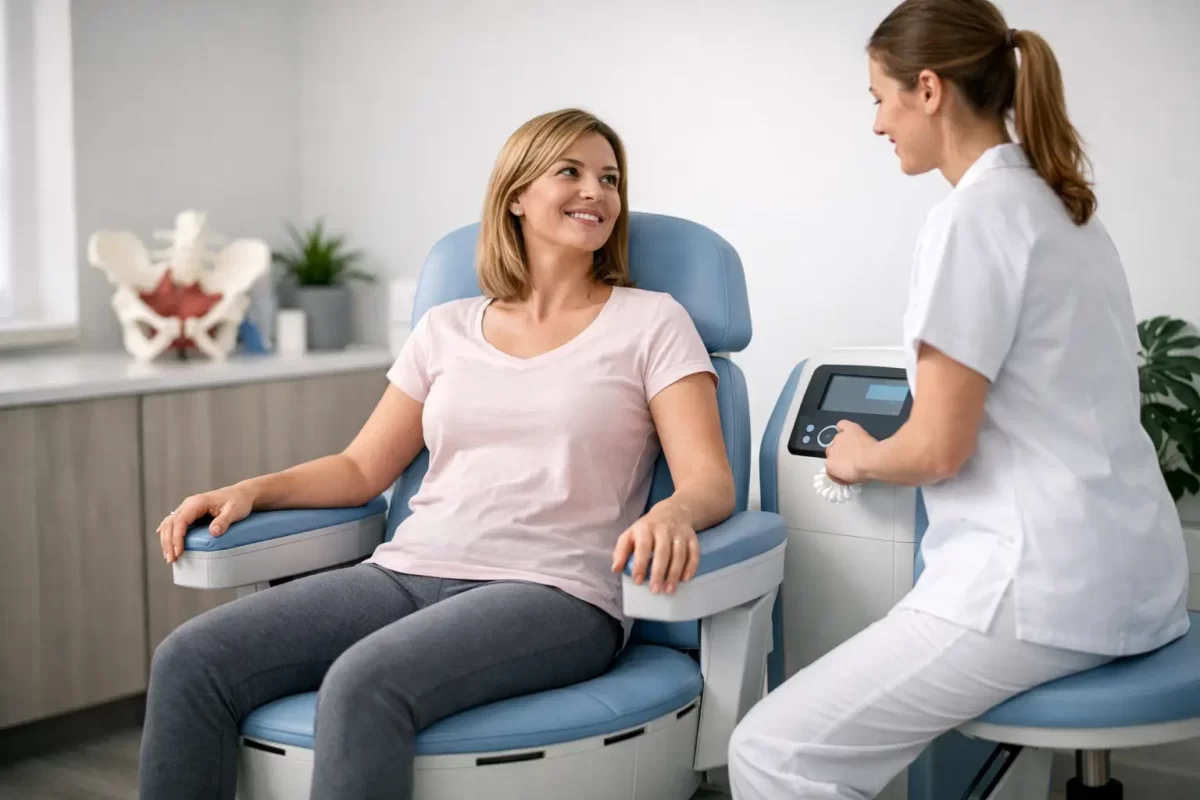
Leaking when you laugh, rushing to the toilet, waking several times a night, or feeling less control than you used to can quietly shrink your world. Pelvic floor chair treatment is designed for exactly these problems – offering a non-surgical, fully clothed option for women and men who want real improvement without pads, medication or recovery time.
What is pelvic floor chair treatment?
Pelvic floor chair treatment uses high-intensity electromagnetic energy to stimulate the pelvic floor muscles while you sit in a specialised medical chair. The best-known device in this category is the EMSELLA chair. Rather than asking you to perform Kegels on your own, the treatment triggers thousands of supramaximal muscle contractions in a single session – far beyond what most people can achieve voluntarily.
That matters because the pelvic floor is not a small issue. These muscles support the bladder, bowel and pelvic organs, and they also play a role in vaginal tone, sexual function and core stability. When the muscles weaken, symptoms can show up gradually or all at once. You might notice dribbling after using the toilet, urgency that is hard to control, stress incontinence when coughing or exercising, or reduced confidence during intimacy.
For many patients, the attraction is simple. You stay dressed, the treatment is quick, and there is no surgery, no anaesthetic and no downtime.
How pelvic floor chair treatment works
The technology behind the chair
The chair delivers focused electromagnetic stimulation into the pelvic floor. This stimulation causes the muscles to contract and relax repeatedly in a highly targeted way. The goal is not a temporary squeeze. It is retraining and strengthening the neuromuscular system so the pelvic floor can better support bladder control and pelvic function in everyday life.
A single session can produce the equivalent of thousands of pelvic floor contractions. That intensity is difficult to match with unsupervised exercises at home, especially if you are unsure whether you are activating the correct muscles in the first place.
Why stronger muscles can reduce symptoms
When the pelvic floor is stronger and better coordinated, it can improve support around the urethra and bladder. That can help reduce accidental leakage, lessen urgency and improve control during movement, lifting, laughing or exercise. In some patients, it may also contribute to better vaginal tone and improved sexual satisfaction. Men with pelvic floor weakness, including some experiencing post-prostate treatment symptoms or aspects of erectile dysfunction, may also benefit depending on their clinical picture.
The key point is that this is not a beauty treatment dressed up as medicine. Used properly, it is a device-based therapy aimed at functional improvement.
Who may benefit from pelvic floor chair treatment?
This treatment can suit a broad range of adults, but the reasons people seek it are often very specific. Postpartum women may feel they never fully recovered strength or control after pregnancy and birth. Women around menopause may notice worsening urgency, leakage or vaginal laxity as tissues and muscle support change. Men may seek treatment after prostate-related issues or surgery, or because pelvic floor weakness is affecting confidence and sexual function.
It can also be a practical option for people who have tried Kegels and got nowhere. Often that is not due to lack of effort. Many people are never properly taught how to engage the pelvic floor, and some are too weak, too fatigued or too inconsistent to get meaningful results from home exercises alone.
That said, not every bladder problem is caused by simple pelvic floor weakness. Urinary tract issues, prolapse, neurological conditions, prostate enlargement and other medical concerns can overlap with incontinence symptoms. That is why a medical assessment matters.
Why doctor-led assessment makes a difference
A pelvic floor chair is only as useful as the clinical judgement behind it. Before treatment, patients should be screened to confirm whether the therapy is appropriate, safe and likely to help. This is especially important if symptoms are severe, new, associated with pain or bleeding, or have developed after surgery or other health changes.
A doctor-led clinic can assess your symptoms, relevant medical history and treatment goals rather than treating everyone as though they have the same problem. That allows more accurate patient selection and more realistic expectations. It also helps identify when pelvic floor chair treatment should be part of a broader care plan, not the whole plan.
For patients who feel embarrassed discussing bladder control or intimate concerns, this approach usually feels more respectful as well. Sensitive symptoms deserve proper medical attention, not a one-size-fits-all sales pitch.
What a course of treatment usually involves
Most patients do not have one session and walk away cured. Pelvic floor chair treatment is generally delivered as a course over several weeks, with each session lasting under half an hour. During treatment, you sit on the chair while the device works through programmed cycles of stimulation. You may feel tingling, tightening and strong contractions in the pelvic floor and surrounding muscles, but it should not be painful.
Improvement can begin during the course, although the timeline varies. Some people notice better control quickly. Others improve more gradually as muscle conditioning builds. The best results often come with a full treatment plan and sensible follow-up, especially if symptoms have been present for a long time.
Maintenance may be recommended for some patients. That is not a drawback so much as a reflection of how the body works. Muscles can weaken again over time, particularly with ageing, hormonal change, chronic straining, high-impact activity or ongoing prostate-related issues.
Benefits patients often care about most
The biggest benefit is usually not the technology itself. It is what better pelvic floor function gives back. For one person, that means getting through a work meeting without worrying about leakage. For another, it means going for a walk, sleeping more soundly, exercising with confidence, or feeling less anxious about intimacy.
Patients are often looking for a treatment that fits real life. A chair-based therapy appeals because there is no need to undress, no recovery period and no interruption to normal activities. For busy adults, especially those balancing work, family and caring responsibilities, that convenience is not trivial.
There is also value in avoiding medication or surgery where appropriate. Drug-free and non-invasive options can be appealing for people who want symptom relief without side effects, procedures or lengthy rehabilitation.
What pelvic floor chair treatment cannot do
Clear expectations matter. Pelvic floor chair treatment can be highly useful, but it is not magic and it is not the right answer for every person. Results depend on the cause of symptoms, how advanced the problem is, overall health, hormonal factors and whether there are other pelvic or urinary conditions involved.
Some patients get strong improvement. Others get partial improvement. A smaller group may not respond enough to consider it worthwhile. Severe prolapse, complex neurological issues or structural problems may need different management. Even when the treatment helps, it may reduce symptoms rather than eliminate them completely.
A credible clinic should tell you that upfront.
Is pelvic floor chair treatment safe?
For suitable patients, this treatment is generally considered safe and well tolerated. The chair-based approach is non-invasive, and because there is no cutting, injection or anaesthetic, the risk profile is different from surgical options. Still, screening is essential. Certain implanted devices, pregnancy and some medical conditions may make treatment unsuitable.
This is another reason to choose a clinic that treats pelvic floor concerns as a medical issue, not a casual add-on service. Safety starts with proper screening and informed care.
Pelvic floor chair treatment in Melbourne: what to look for
If you are considering pelvic floor chair treatment in Melbourne, look beyond marketing claims. Ask whether the clinic offers medical consultation, whether your symptoms are properly assessed, who determines your suitability, and what outcomes are realistic for your condition. A clinic such as Advance Medical Therapies, with GP-led oversight under Dr Shikha Parmar, reflects the level of care many patients want when the issue is both physical and deeply personal.
The best treatment experience is one where you feel informed, respected and guided – not rushed.
Bladder leakage and pelvic floor weakness are common, but common does not mean you have to put up with them. If symptoms are affecting your confidence, sleep, exercise or relationships, that is reason enough to seek proper advice and see what may be possible.
Ready to take the next step?
Contact our team to arrange your Emsella consultation and discuss your symptoms, goals, and whether Emsella may be appropriate for you.
Located in Melbourne
(03) 8529 2225 | Contact Us