

How Pelvic Floor Muscle Reeducation Helps
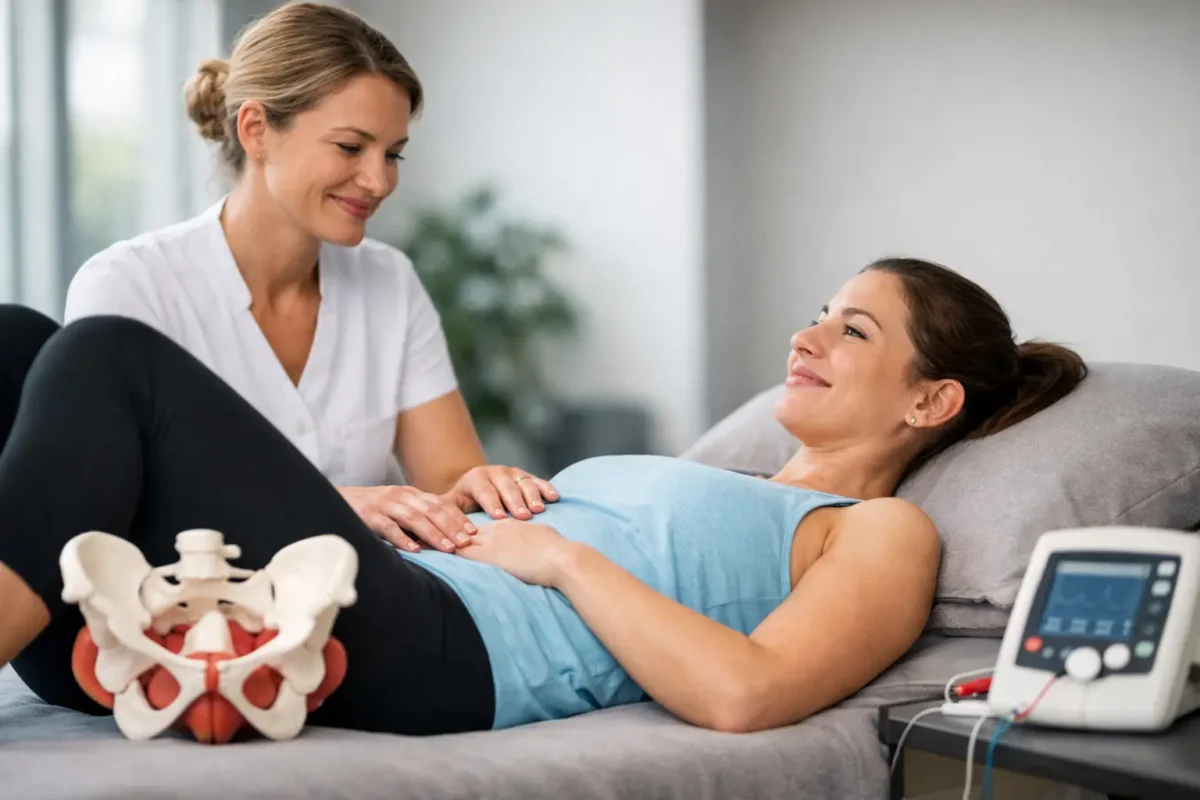
A laugh that turns into a leak. Planning every outing around the nearest toilet. Avoiding a gym class, a long drive or intimacy because your body no longer feels predictable. These are common experiences, but they are not something you simply have to put up with. Understanding the role of pelvic floor muscle reeducation can help people consider whether assessment and treatment may be appropriate for their symptoms.
Pelvic floor symptoms can affect women and men at different stages of life. Pregnancy and birth, menopause, ageing, high-impact exercise, chronic coughing, prostate conditions and pelvic surgery can all place pressure on the muscles that support the bladder, bowel and sexual function. The result may be leakage with movement, a sudden urge to pass urine, waking at night, reduced vaginal tone or changes in sexual function.
What pelvic floor muscle reeducation means
Pelvic floor muscle reeducation is a structured way of helping these deep muscles contract, relax and coordinate more effectively. It is not simply about squeezing harder. A healthy pelvic floor needs strength, endurance, timing and the ability to release when appropriate.
When the muscles are weak or poorly coordinated, they may not respond quickly enough when pressure rises inside the abdomen. That pressure can come from coughing, lifting groceries, running for a tram or laughing with friends. If the pelvic floor cannot provide adequate support at that moment, urine leakage may occur.
Reeducation aims to improve pelvic floor muscle activation, relaxation, coordination and control. This matters because many people have been told to do Kegels but are unsure whether they are using the right muscles, practising often enough or relaxing between contractions. Some unintentionally bear down rather than lift and tighten, which can make symptoms worse.
How pelvic floor muscle reeducation helps bladder control
Better bladder control depends on more than willpower. The pelvic floor works with the bladder, nerves and abdominal muscles as a coordinated system. When it can activate at the right time and with enough force, it provides improved support to the urethra and can help reduce episodes of stress urinary incontinence.
Stress incontinence is leakage brought on by physical pressure, such as a cough, sneeze, jump or lift. It is particularly common after childbirth and around menopause, but it can affect anyone. Pelvic floor reeducation may help the muscles respond more effectively to these everyday demands.
It can also assist people with urgency symptoms, where the need to urinate arrives suddenly and feels difficult to defer. Urgency has several possible causes, including bladder irritation, infection, medication effects and an overactive bladder. Pelvic muscle control can be part of managing urgency, but it is not a substitute for a proper medical assessment. New, severe or persistent symptoms deserve clinical review.
For men, pelvic floor weakness may contribute to leakage after prostate surgery and can affect sexual function. Targeted reeducation may support recovery by improving muscular control around the bladder and pelvis. The right approach depends on the type of surgery, the timing of recovery and each person’s medical history.
Strength is useful, but coordination matters too
A common misconception is that a stronger pelvic floor is always the answer. In reality, some people have muscles that are tense, overactive or unable to relax properly. They may experience pelvic discomfort, difficulty emptying the bladder or bowel, or pain with intimacy. In these situations, repeated tightening alone may not be appropriate.
That is why clinician-led assessment matters. A medical practitioner can consider your symptoms, health history and treatment goals before recommending a plan. The aim is not a one-size-fits-all exercise prescription. It is to identify whether muscle weakness, poor coordination, excessive tension or another condition is likely to be driving the problem.
Why unsupervised exercises do not work for everyone
Pelvic floor exercises are worthwhile for many people, particularly when they are taught correctly and practised consistently. Yet it is understandable to lose motivation when you have been squeezing at home for months without a clear change.
There are practical reasons this happens. The pelvic floor is internal, so it can be difficult to know whether a contraction is correct. Daily practice may fall away when life is busy. Some muscles are so weak that generating a meaningful contraction is challenging, while others fatigue quickly. Symptoms can also be caused by factors that exercises alone cannot address.
If home exercises have not helped sufficiently, further assessment may identify whether technique, a different treatment approach or further investigation is appropriate.
Device-based reeducation with EMSELLA
For suitable patients, EMSELLA is a non-invasive treatment designed to stimulate pelvic floor contractions using high-intensity focused electromagnetic energy. You remain fully clothed and seated in a specialised chair while the technology targets the pelvic floor. Sessions are delivered in a clinic setting while the patient remains fully clothed and seated.
The treatment produces repeated high-intensity pelvic floor contractions in a controlled clinical setting. The treatment is intended to stimulate pelvic floor muscle activity and may be considered for suitable patients who have difficulty performing pelvic floor exercises independently.
EMSELLA does not require surgery, needles, anaesthetic or downtime. The treatment does not require surgical recovery or anaesthetic. However, convenience should not replace appropriate screening. Device-based pelvic floor treatment is not right for everyone, including people with certain implanted electronic or metal devices, and individual contraindications must be assessed carefully.
At Advance Medical Therapies, treatment is consultation-led under medical oversight. This is important because a chair-based treatment should be part of a clinical decision, not a generic wellness purchase. The consultation helps determine whether pelvic floor reeducation is appropriate and whether further assessment is needed before treatment begins.
How treatment response may be assessed
Treatment response varies between individuals and may be assessed using changes in urgency, leakage, pad use and the effect of symptoms on daily activities. Individual treatment goals may relate to exercise, work, bladder control or intimacy, depending on the symptoms and priorities of the patient.
Changes in sexual wellbeing can also matter. Pelvic floor function contributes to sensation, vaginal support and arousal in women, and to erectile function and ejaculatory control in men. Results vary, and no treatment can promise a particular sexual outcome, but pelvic floor treatment may form part of broader care where pelvic floor dysfunction is contributing to sexual symptoms.
Treatment may involve a course of sessions rather than a single visit, depending on assessment and the treatment plan. The number of sessions, the pace of results and the role of maintenance depend on symptom severity, overall health, lifestyle and the underlying cause of weakness. Good hydration, managing constipation, maintaining a healthy weight where appropriate and addressing chronic coughing can also reduce ongoing strain on the pelvic floor.
When to seek a medical assessment first
Do not assume every bladder symptom is pelvic floor weakness. Blood in the urine, burning or pain when urinating, recurrent urinary infections, pelvic pain, a noticeable prolapse, difficulty emptying the bladder, unexplained weight loss or a sudden major change in continence should be assessed promptly.
It is also sensible to seek advice if leakage began after surgery, follows a neurological diagnosis or is accompanied by bowel changes. Pelvic floor reeducation may still have a role, but the treatment pathway should be guided by the cause rather than the symptom alone.
A dignified next step
If pelvic floor symptoms are affecting clothing choices, activities, relationships or daily life, clinical assessment can help clarify possible causes and whether pelvic floor muscle reeducation or another management approach may be appropriate.
Ready to take the next step?
Contact our team to arrange your Emsella consultation and discuss your symptoms, goals, and whether Emsella may be appropriate for you.
Located in Melbourne
(03) 8529 2225 | Contact Us
