

A Guide to Male Bladder Control Issues
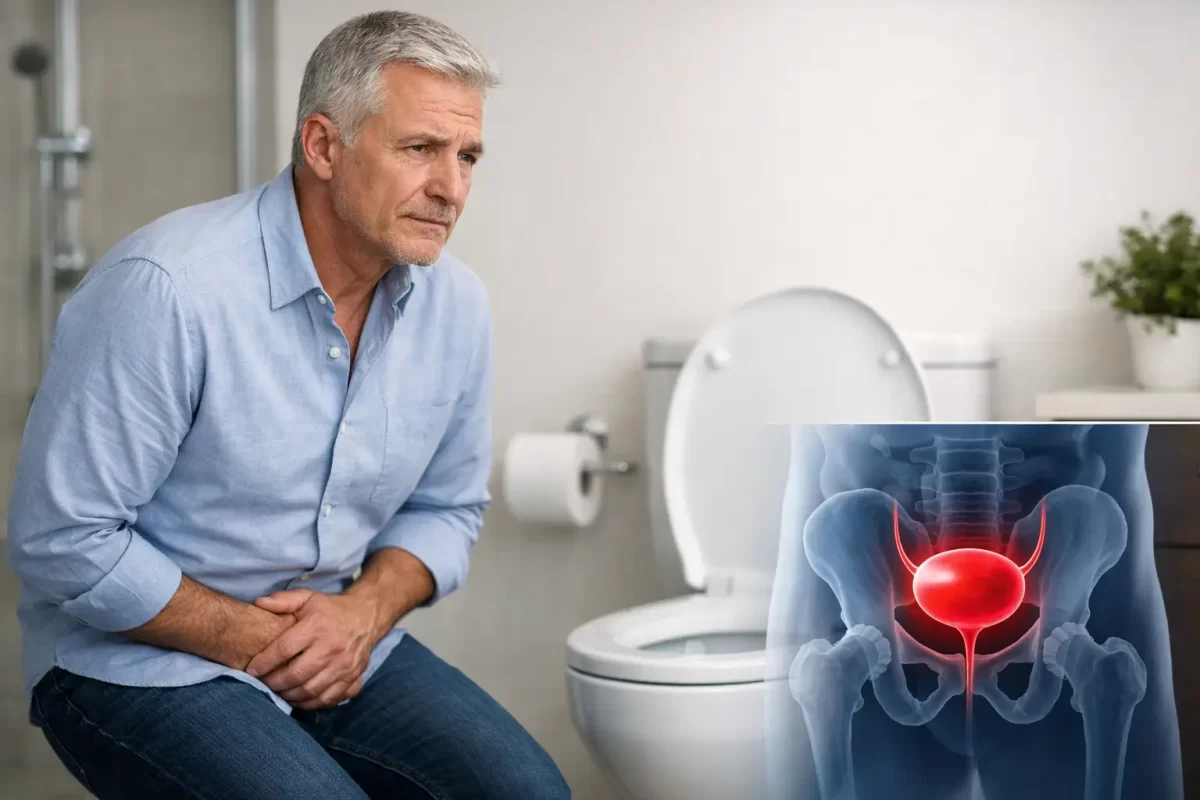
Needing to know where the nearest toilet is at all times, waking several times a night, or dealing with leaks after a cough or a walk to the shops can wear you down quickly. This guide to male bladder control issues is for men who want straight answers about what is happening, why it happens, and what can be done about it.
For many men, bladder control problems start gradually. You might notice urgency, a weaker stream, dribbling after urination, or small leaks during exercise. Others develop symptoms after prostate surgery or alongside ageing, weight gain, chronic coughing, or constipation. Whatever the trigger, bladder leakage is not simply something to put up with. It is a medical issue, and in many cases it can improve with the right assessment and treatment.
What male bladder control issues can look like
Male bladder control issues do not always present in the same way. Some men leak when pressure rises in the abdomen, such as when coughing, laughing, lifting, or getting out of a chair. This is often described as stress incontinence. Others feel a sudden, hard-to-ignore urge to pass urine and may not make it to the toilet in time. That pattern is more consistent with urge incontinence or overactive bladder.
There is also overflow leakage, where the bladder does not empty properly and small amounts dribble out, and mixed patterns, where more than one mechanism is involved. The distinction matters because treatment should match the cause rather than just the symptom.
Men often minimise these changes for months or years. They cut back fluids, avoid outings, map every public toilet, and hope the problem settles on its own. That coping strategy is common, but it rarely addresses the underlying issue.
Why bladder control changes in men
The bladder and pelvic floor work as a team. The bladder stores urine, the sphincter helps keep it in, and the pelvic floor muscles support the bladder and bowel while contributing to continence control. If one part of that system is under strain or not working efficiently, leakage, urgency, and frequency can follow.
Prostate-related factors
In men over 40, the prostate is often part of the picture. An enlarged prostate can affect urine flow and bladder emptying. Prostate surgery can also alter the mechanics of continence, particularly in the early recovery period, though some men continue to experience symptoms well beyond that.
Pelvic floor weakness
Pelvic floor weakness is not only a women’s health issue. Men have a pelvic floor too, and when those muscles are not functioning well, bladder control can suffer. This weakness may develop with age, after surgery, with chronic straining, or simply because the muscles have never been trained effectively.
Bladder irritation and lifestyle factors
Caffeine, alcohol, constipation, excess weight, and smoking can all aggravate symptoms. So can poorly controlled diabetes, certain neurological conditions, and some medications. That does not mean every man needs the same lifestyle overhaul, but it does mean bladder symptoms should be assessed in context.
When to seek medical advice
If bladder leakage is affecting your confidence, sleep, exercise, work, travel, or intimacy, that is reason enough to have it checked. You should also seek timely medical advice if symptoms are new, worsening, painful, associated with blood in the urine, or linked to recurrent urinary infections.
There is no prize for tolerating symptoms longer than necessary. Identifying the cause helps build a treatment plan that is realistic and appropriately targeted.
A practical guide to male bladder control issues and assessment
A proper assessment should be straightforward, respectful, and focused on what matters in day-to-day life. In a consultation-led setting, the starting point is usually your symptoms, medical history, prostate history, current medications, fluid habits, bowel function, and how much the problem is affecting you.
From there, your clinician may consider whether your symptoms suggest stress incontinence, urgency, incomplete emptying, pelvic floor dysfunction, or a mixed pattern. Sometimes additional investigations are needed. Sometimes they are not. It depends on your history, age, risk factors, and whether any red flags are present.
This is also where men can gain a clearer understanding of which aspects of the problem may be treatable. What feels vague and frustrating at home often becomes clearer once it is assessed clinically.
What treatment can involve
Treatment is not one-size-fits-all. For some men, bladder training, fluid adjustment, constipation management, and weight reduction make a meaningful difference. For others, the main issue is pelvic floor weakness, and the focus needs to be on strengthening the muscles that support continence.
Traditional pelvic floor exercises can help, but they are not always done correctly or consistently. That is one of the main reasons men give up. It can be difficult to identify the right muscles, hard to maintain motivation, and frustrating when results are slow or uncertain.
Medication may be appropriate in some cases, particularly where urgency or prostate symptoms are prominent, but that depends on the diagnosis and the patient’s preferences. Surgery is reserved for selected cases and is not the first step for everyone.
Where non-invasive pelvic floor treatment fits
For men with bladder control issues related to pelvic floor weakness, non-invasive pelvic floor therapy can be a practical option. EMSELLA is one example of a device-based treatment designed to stimulate deep pelvic floor muscle contractions while the patient remains fully clothed and seated.
The appeal is clear. It does not require surgery, needles, or downtime, and it can suit men who have struggled with unsupervised exercises or who want a clinician-guided treatment approach. In a doctor-led clinic, screening is important because not every bladder symptom comes from the same cause, and treatment should only be recommended when it is appropriate for the individual.
This is where medical oversight matters. A consultation helps determine whether pelvic floor weakness is likely to be a key driver of symptoms, whether there are reasons to investigate further first, and whether a non-surgical treatment plan is likely to deliver useful benefit.
What results can vary from person to person
Most men want one simple answer: will it work? The honest answer is that it depends on the cause of the problem, how long symptoms have been present, whether the pelvic floor is involved, and whether there are complicating factors such as significant prostate obstruction or neurological disease.
Some men notice improvement in urgency, leakage, or confidence within weeks. Others need a longer course and a broader management plan. If symptoms are strongly linked to pelvic floor weakness, improvement can be significant. If the main issue is incomplete bladder emptying from obstruction, pelvic floor treatment alone may not be enough.
That is not a drawback of treatment. It is simply good medicine. The right approach starts with knowing what you are treating.
Common concerns men have before treatment
Embarrassment stops many men from seeking help, especially if symptoms are mild but persistent. Others worry they will be told to live with it, handed pads, or pushed toward surgery. In reality, many bladder control issues can be approached in a far more measured way.
Discretion matters too. So does convenience. Men who are still working, travelling, or caring for family often want options that fit around ordinary life. Non-invasive therapies can be attractive for that reason, particularly when they sit within a proper medical framework rather than a generic wellness model.
If you are in Greater Melbourne City or South Yarra and looking for a consultation-led option, Advance Medical Therapies focuses on medically guided pelvic floor treatment for bladder control and related concerns. The key point is not the device alone, but the fact that treatment is matched to the patient after clinical screening.
Small changes that can help while you seek treatment
While formal assessment is the priority, a few practical changes may reduce day-to-day symptoms. Cutting back on bladder irritants such as excess caffeine and alcohol can help some men, but not all. Avoiding constipation is worthwhile because straining places extra pressure on the pelvic floor. Managing chronic cough, if present, can also reduce repeated stress on continence mechanisms.
What usually does not help is drastically restricting fluids. That can concentrate the urine, irritate the bladder, and sometimes worsen urgency. The goal is not to avoid drinking. It is to drink sensibly and understand your pattern of symptoms.
Bladder control problems can feel isolating, but they are common, medically recognisable, and often treatable. If the issue is changing how you sleep, socialise, work, exercise, or feel about yourself, that is enough reason to act. A careful assessment can replace guesswork with a plan, and that can be an important step towards appropriate treatment.
Ready to take the next step?
Contact our team to arrange your Emsella consultation and discuss your symptoms, goals, and whether Emsella may be appropriate for you.
Located in Melbourne
(03) 8529 2225 | Contact Us
