

A lot of people put up with bladder leaks for years. They plan outings around toilets, avoid exercise, wake several times a night, and quietly assume it is just part of getting older, having children, or recovering from prostate problems. Advanced pelvic health therapies are changing that picture by offering a more targeted, medically supervised way to treat symptoms that many patients have been told to simply manage.
What advanced pelvic health therapies actually mean
This term covers treatments that go beyond basic advice to do Kegels at home. It refers to modern, evidence-based options designed to improve pelvic floor function, bladder control and intimate wellness with greater precision and consistency than self-directed exercises alone.
For many patients, the pelvic floor is the missing piece. These muscles support the bladder, bowel and reproductive organs. When they weaken or stop coordinating properly, symptoms can follow – urinary leakage, urgency, reduced vaginal tone, pelvic heaviness, and in some cases reduced sexual satisfaction or erectile difficulties. The problem is not always motivation. Quite often, people simply cannot isolate the right muscles effectively, or they do not train them with enough intensity to produce meaningful change.
That is where device-based therapy has real value. It is not a cosmetic add-on or a wellness trend. In the right clinical setting, it is a practical treatment approach for a common medical issue that affects confidence, comfort and quality of life.
Why standard pelvic floor exercises are not always enough
Pelvic floor exercises still matter. They are often the first recommendation for stress incontinence, postpartum weakness and some menopausal changes. But there is a clear difference between being told to squeeze a muscle and being able to do it correctly, consistently and at a therapeutic level.
Many patients think they are doing pelvic floor work properly when they are actually tightening their abdominals, buttocks or thighs. Others start with good intentions but struggle to stay regular because the exercises feel repetitive, uncertain or ineffective. If symptoms have been present for a long time, the muscles may also be too weak to respond well to casual home practice.
This is one reason more advanced pelvic health therapies have become relevant. They can deliver a stronger and more reliable stimulus to the pelvic floor than unsupervised exercise, while still avoiding surgery, medication and prolonged rehabilitation.
How non-invasive advanced pelvic health therapies work
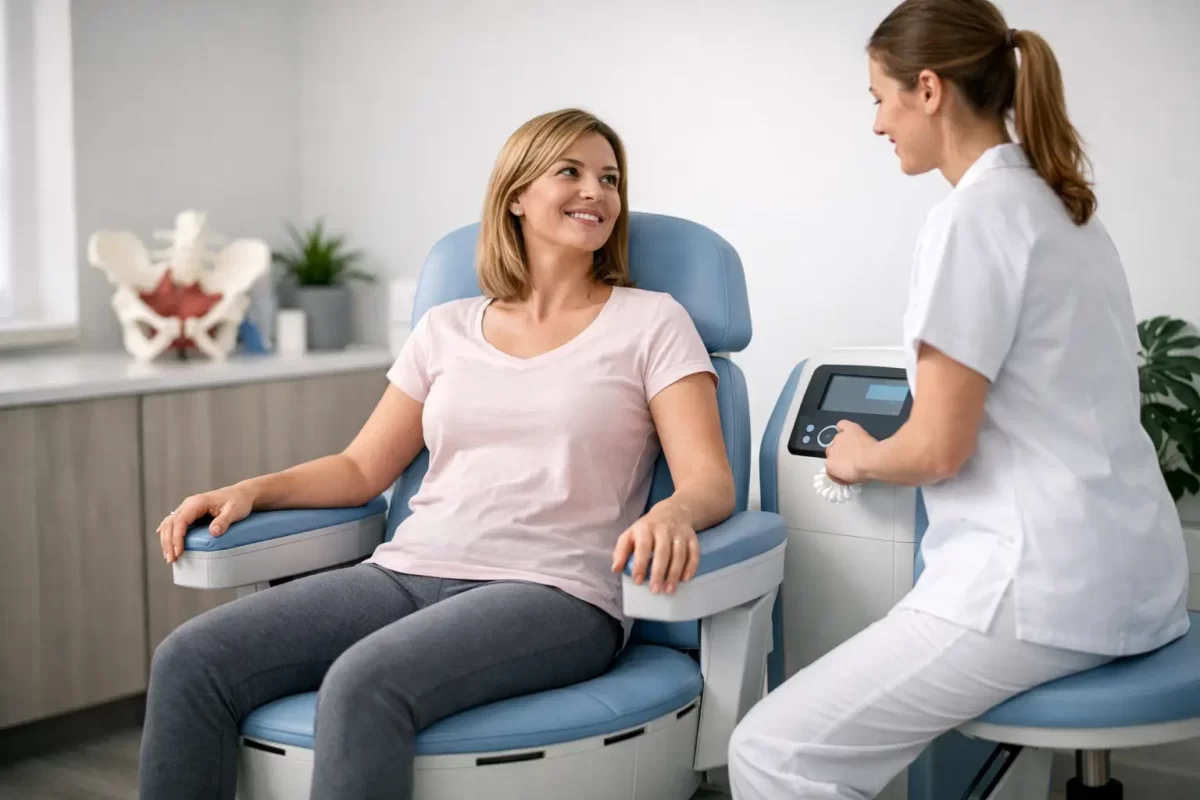
One of the most promising options available today uses high-intensity focused electromagnetic technology to stimulate the pelvic floor muscles while the patient remains fully clothed and seated. The EMSELLA chair is the best-known example of this approach.
Rather than asking the patient to perform repeated contractions manually, the device induces thousands of deep supramaximal pelvic floor contractions during a single session. These contractions are far more intense than most people can achieve on their own. The goal is to retrain the muscles, improve neuromuscular control and restore better support around the bladder and pelvic structures.
For patients, the experience is straightforward. There are no internal probes, no anaesthetic, and no downtime. Treatment sessions are brief enough to fit into a normal day, which matters when symptoms are disruptive but life is already busy.
That convenience is important, but it should not be the only reason someone chooses treatment. The more meaningful point is that this kind of therapy can offer a clinically guided path forward for people who want real symptom improvement without invasive intervention.
Who may benefit most
The best candidates are usually people with stress urinary incontinence, urgency, mixed incontinence, pelvic floor weakness after childbirth, menopausal pelvic laxity, or bladder symptoms that have not improved with basic exercises. Men may also benefit, particularly if they are dealing with pelvic floor weakness after prostate treatment or symptoms affecting bladder control and sexual function.
It is not one-size-fits-all. A proper medical assessment still matters because not every bladder symptom comes from pelvic floor weakness alone. Urinary tract issues, significant prolapse, neurological conditions and other causes need to be considered before any treatment plan is recommended.
Why doctor-led care matters in pelvic health
Pelvic health is an area where patients are often vulnerable to oversimplified marketing. If a treatment is presented as suitable for everyone, with no assessment and no discussion of likely outcomes, that is a concern.
A doctor-led model is more appropriate because it starts with diagnosis, screening and suitability. That means looking at the type of incontinence, the severity of symptoms, how long they have been present, relevant medical history and whether there are factors that may limit results. It also allows patients to ask questions they may have delayed asking for years.
This is especially important for anyone who feels embarrassed or has been minimising the problem. Leakage is common, but common does not mean trivial. It affects exercise, work, sleep, travel, intimacy and mental wellbeing. Being assessed by a doctor-led clinic gives the treatment process more credibility and more safety than treating it as a casual retail service.
What results can patients realistically expect?
Good pelvic floor treatment should be discussed honestly. Many EMSELLA patients notice improvement in bladder control, urgency, confidence and pelvic support after a course of therapy, but the degree of change varies.
It depends on the underlying cause, how severe the weakness is, whether symptoms have been present for months or years, and whether the patient combines treatment with sensible lifestyle changes. For some, the difference is dramatic. They stop planning every outing around toilet access, return to exercise or sleep more soundly. For others, the gain is meaningful but partial – fewer leaks, less urgency, and better day-to-day control rather than a perfect cure.
That does not make the treatment unsuccessful. If a patient can cough, laugh, walk or attend social events with far less fear of leakage, that is a significant quality-of-life improvement.
Beyond bladder control
Advanced pelvic health therapies are often sought for urinary symptoms, but the benefits can extend further. A stronger pelvic floor may improve vaginal tone and support aspects of sexual wellbeing in women. In men, better pelvic floor function can play a role in urinary control and may support erectile function in selected cases.
These are sensitive subjects, and they deserve to be discussed plainly. Reduced intimacy, loss of confidence and feeling disconnected from your own body are not minor complaints. They are legitimate health concerns, particularly when they follow childbirth, menopause, surgery or ageing-related changes.
The trade-offs patients should understand
Non-invasive treatment has obvious appeal, but it is still worth being clear about the trade-offs. It is not instant, and it is not a substitute for good medical judgement. Most patients need a full course of sessions, and some may need maintenance treatment depending on age, tissue quality, hormonal changes and the chronicity of symptoms.
It is also not the right option for every person. Certain implanted devices, specific medical conditions or individual anatomical factors may affect suitability. That is another reason medical screening matters.
Cost is part of the conversation as well. Pelvic health treatment is an investment, so patients should expect a clear explanation of what the treatment is designed to do, how progress will be assessed and whether their symptom pattern makes them a good candidate.
When to consider advanced pelvic health therapies
If you are using pads regularly, avoiding exercise, waking multiple times overnight, feeling anxious about leaking in public, or finding that pelvic floor exercises have not helped, it is reasonable to seek a more advanced option. The earlier symptoms are properly assessed, the sooner you can move from coping to treatment.
That applies to several groups in particular: women after childbirth who never quite regained pelvic strength, menopausal women noticing worsening urgency or laxity, and men dealing with post-prostate bladder symptoms. These are common scenarios, but they should not be written off as something you simply have to live with.
For patients in Greater Melbourne, Advance Medical Therapies offers access to consultation-led care that treats pelvic floor problems as a medical issue, not an embarrassing inconvenience. That distinction matters because the right treatment starts with being taken seriously.
Modern pelvic therapy is not about promises that sound too good to be true. It is about using better tools, under proper clinical supervision, to help people regain control, comfort and confidence. If bladder leaks or pelvic weakness are shaping your day more than they should, that is reason enough to have the conversation.
Ready to take the next step?
Contact our team to arrange your Emsella consultation and discuss your symptoms, goals, and whether Emsella may be appropriate for you.
Located in Melbourne
(03) 8529 2225 | Contact Us